A History of 158 South Oxford Street, part 1
Sometimes I do a deep dive “beyond the borders” of Brooklyn Heights. Here’s another one of those stories.
Fort Greene’s old freestanding wooden house at 158 South Oxford Street has been in the news lately. First came word in January 2026 that the house was slated for demolition, to be replaced by an apartment building. More recently, a report says NYC’s Landmarks Preservation Commission will take no action on a request to evaluate the house for designation as an individual landmark.
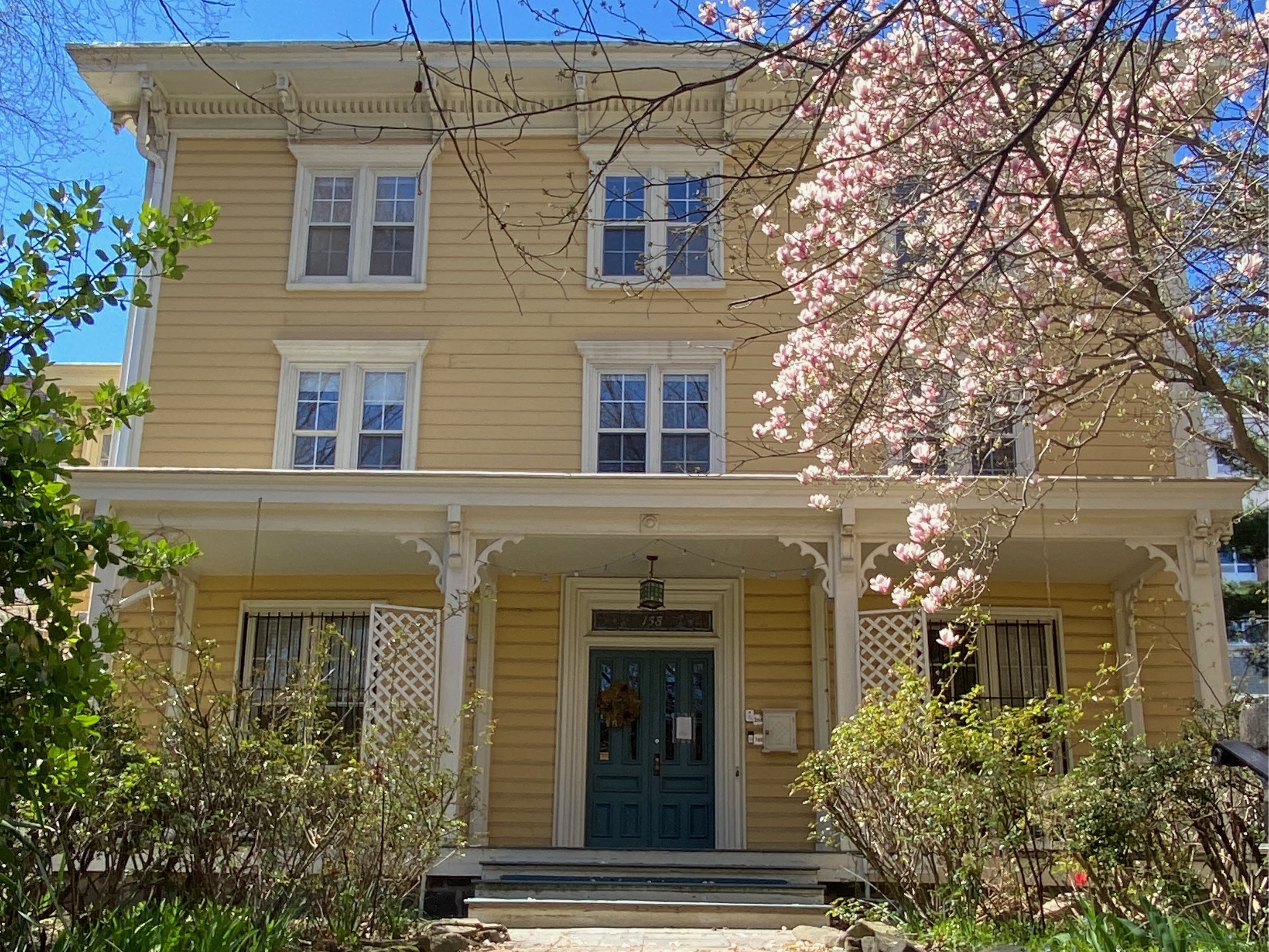
The headline writers are in agreement: the clapboard house is painted butter yellow. 🙂 Whether it’s properly called a country house, villa, mansion, or manse seems to be a matter of opinion. But here’s the burning question in my mind whenever I read a story about an old Brooklyn house: do we have an accurate date for when it was built?
The AIA Guide entry for 158 South Oxford Street dates the house as “circa 1860,” a factoid that every story on the building has since repeated. But as the late Christopher Gray reminded us in a comment to Suzanne Spellen’s early Brownstoner write-up on this house, even the Guide’s co-author Elliot Willensky “put his pants on one leg at a time.” So while 1860 was a decent educated guess, the Guide’s authors could hardly be expected to research every single house in detail.
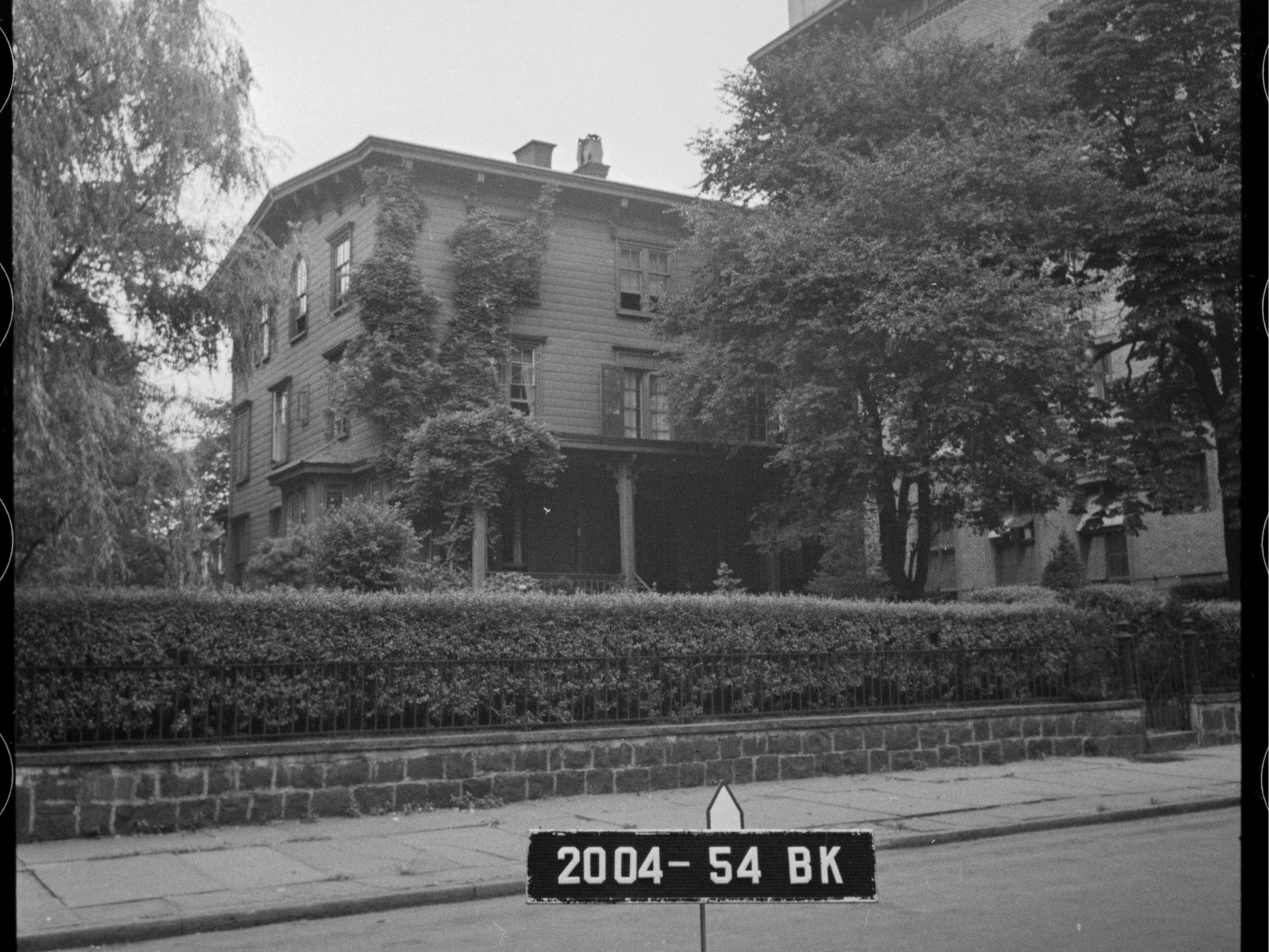
In fact, my digging through Brooklyn’s old land records reveals that 158 South Oxford Street was built in 1846 – over a decade earlier than previously suspected! And this investigation in the archives paints a more complete picture of who was responsible for building the house, who first lived in it, and what the block was like in the house’s early years.
The scene on Oxford Street was set two centuries earlier than the mid-1800s, going back to the first Dutch land patents in Brooklyn. Much of what is today the neighborhood of Fort Greene had been in the Cowenhoven (or Couwenhooven) family since at least the 1680s.
In 1844, the trustees of the estate of one John Cowenhoven recognized the burgeoning development potential of the future Fort Greene. Brooklyn itself had become a city 10 years earlier, and the Cowenhoven land was adjacent to the newly urbanizing part of Kings County. The trustees decided to sell off the estate as building lots. They hired city surveyor Silas Ludlam to plot out what they called the “Cowenhoven Homestead.”
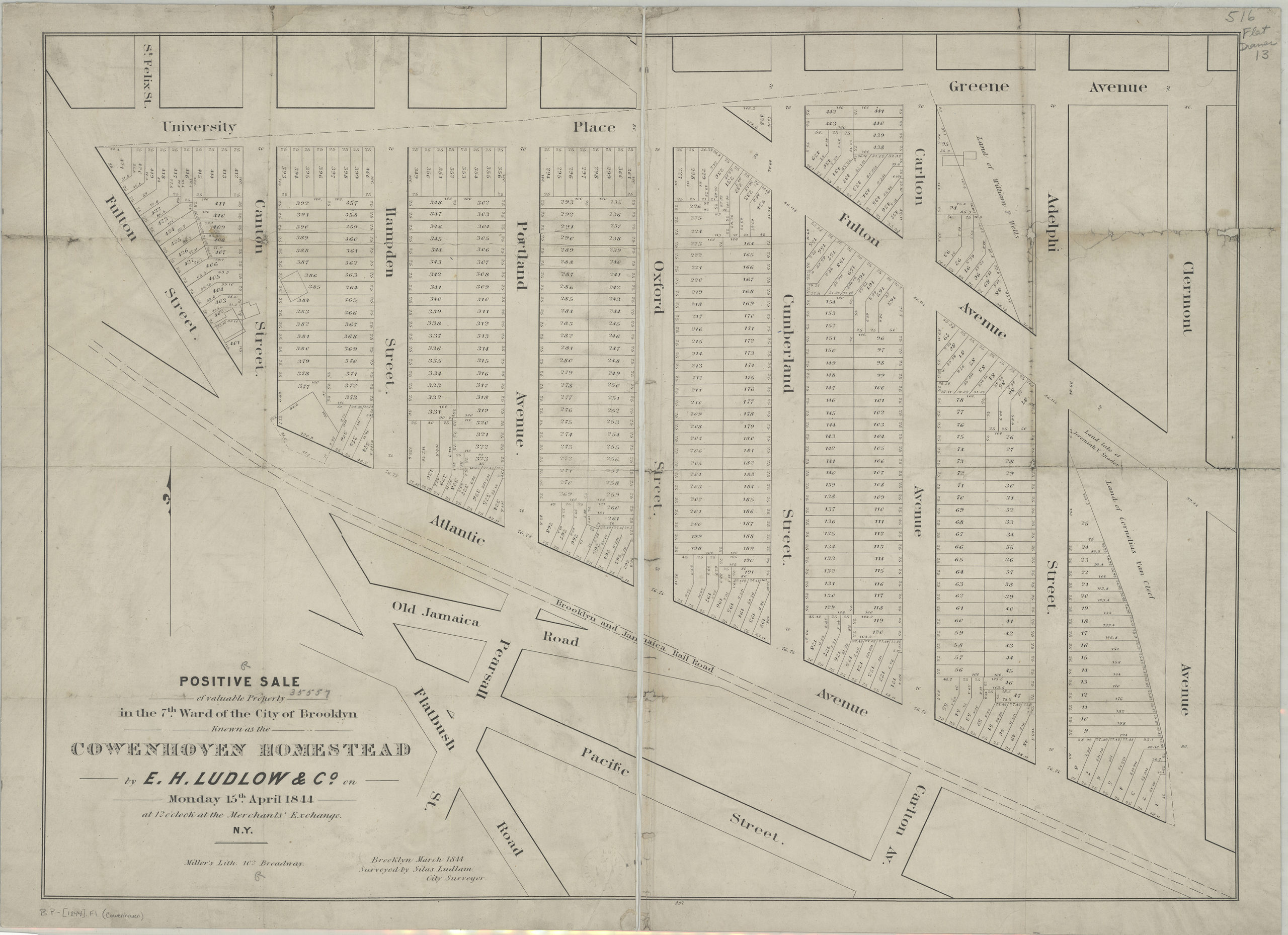
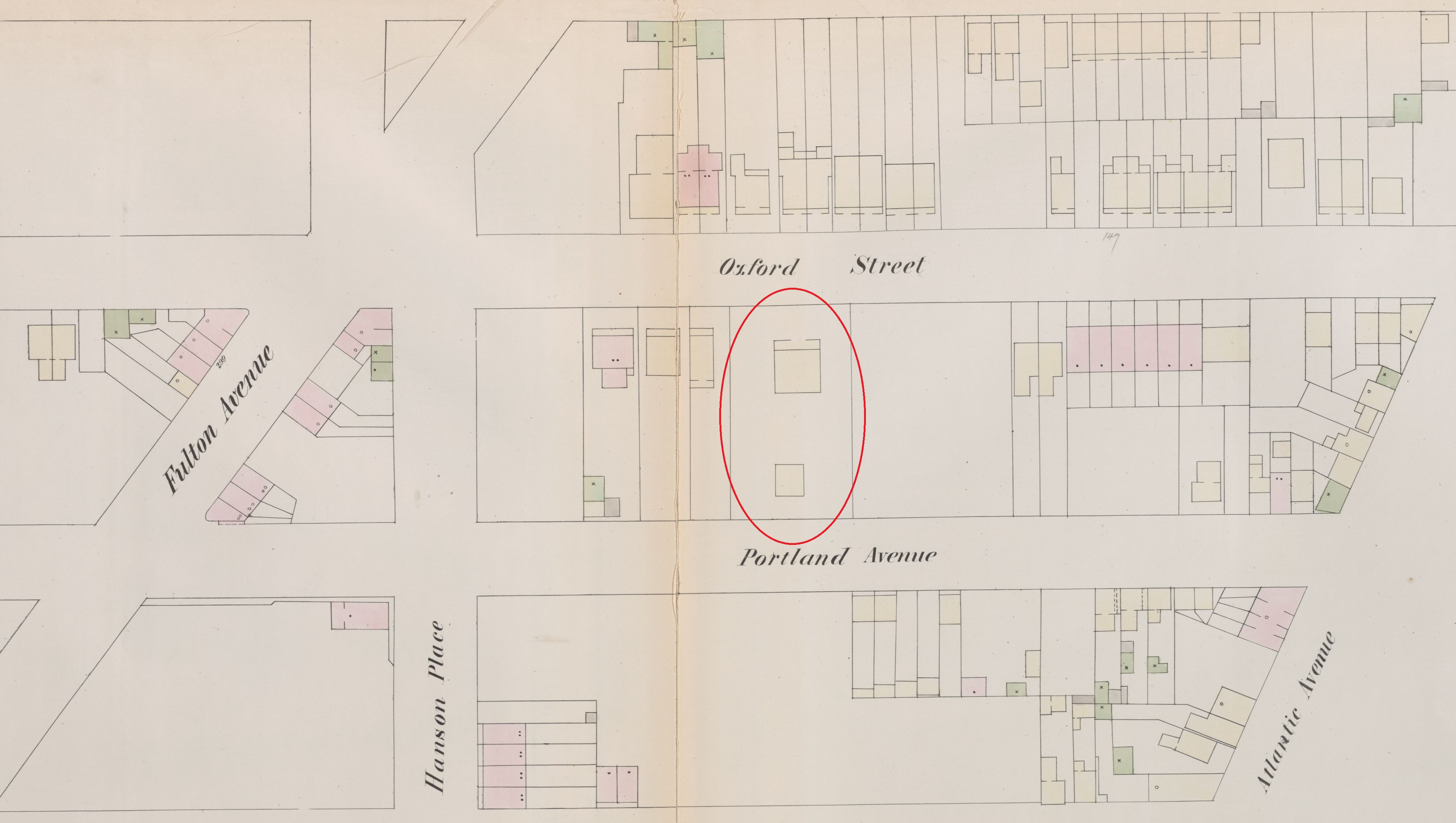
Ludlam’s map divided the homestead into hundreds of 25 feet x 100 feet “city lots.” The map reflects archaic street names like “University Place” which later was renamed Hanson Place. Originally Oxford Street was called just that – not divided like today into “South” and “North” portions divided by the great park in the neighborhood’s center.

The estate offered lots from the Cowenhoven Homestead at an auction in Manhattan in April 1844. (Exactly 182 years ago!) But most of the homestead wasn’t picked up as individual lots. Instead, prolific Brooklyn real estate speculators of the era, like George S. Howland and William S. Packer, purchased the lots in bulk.
One of Howland’s purchases from the Cowenhoven estate was a group of 28 lots – about two acres – between Oxford Street and Portland Avenue. This tract stretched from University Place all the way down to what would become the southern boundary of this house’s plot.
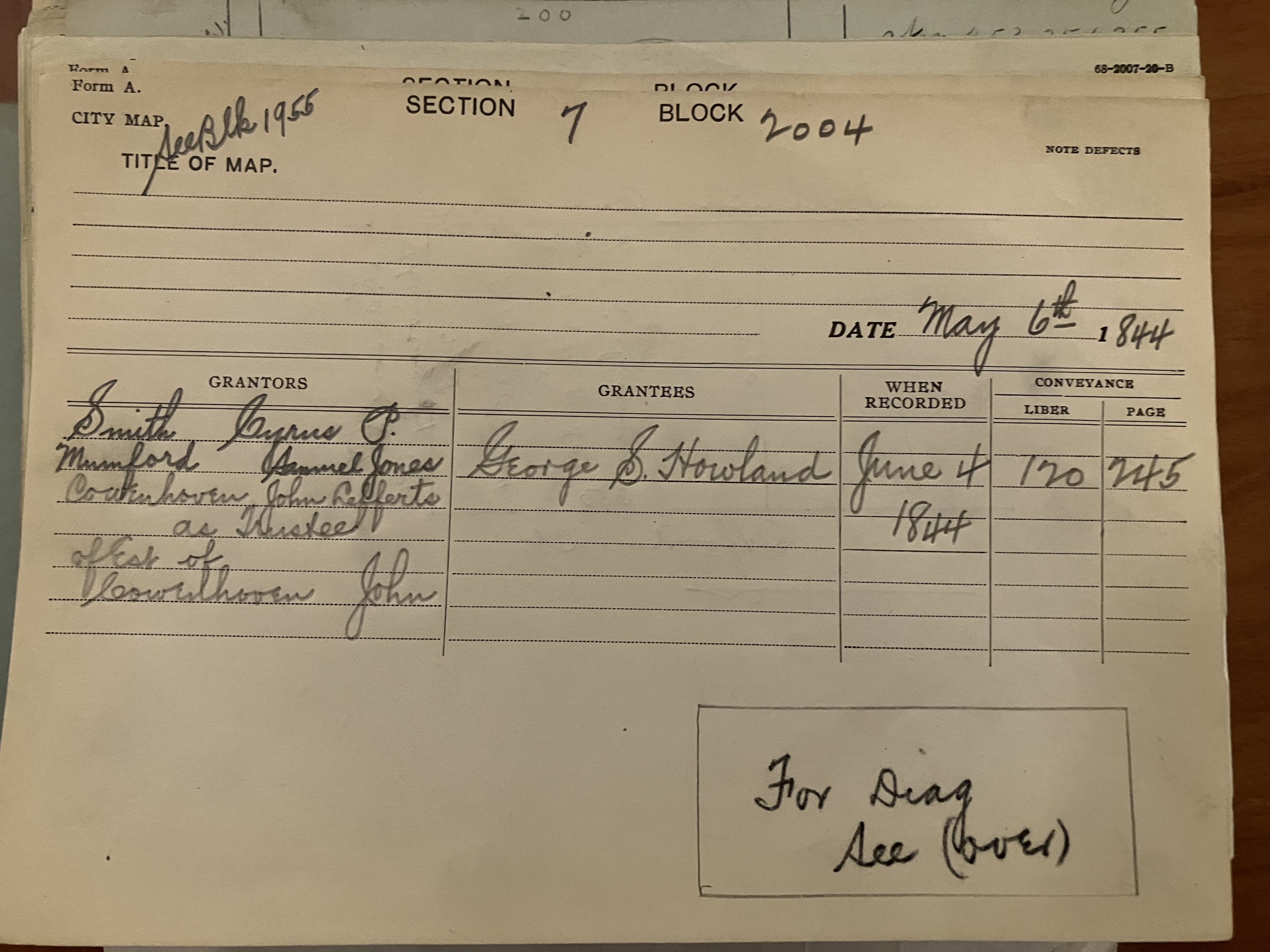
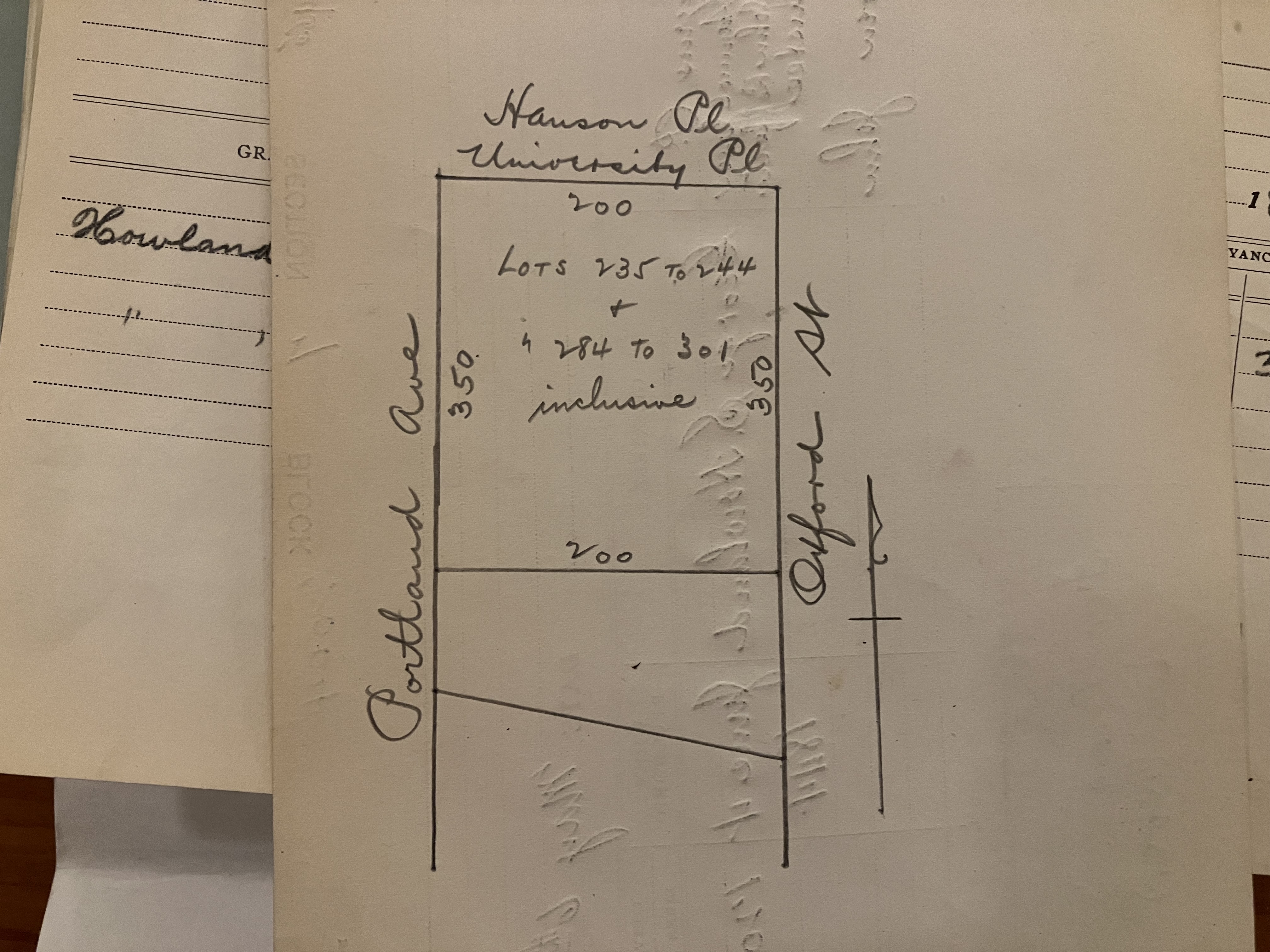
Howland closed on the purchase in May 1844. Over the next several months, Howland split his tract into smaller parcels for resale. But many of the plots he offered were still amply sized for large free-standing villas surrounded by gardens, not single lots for city rowhouses.
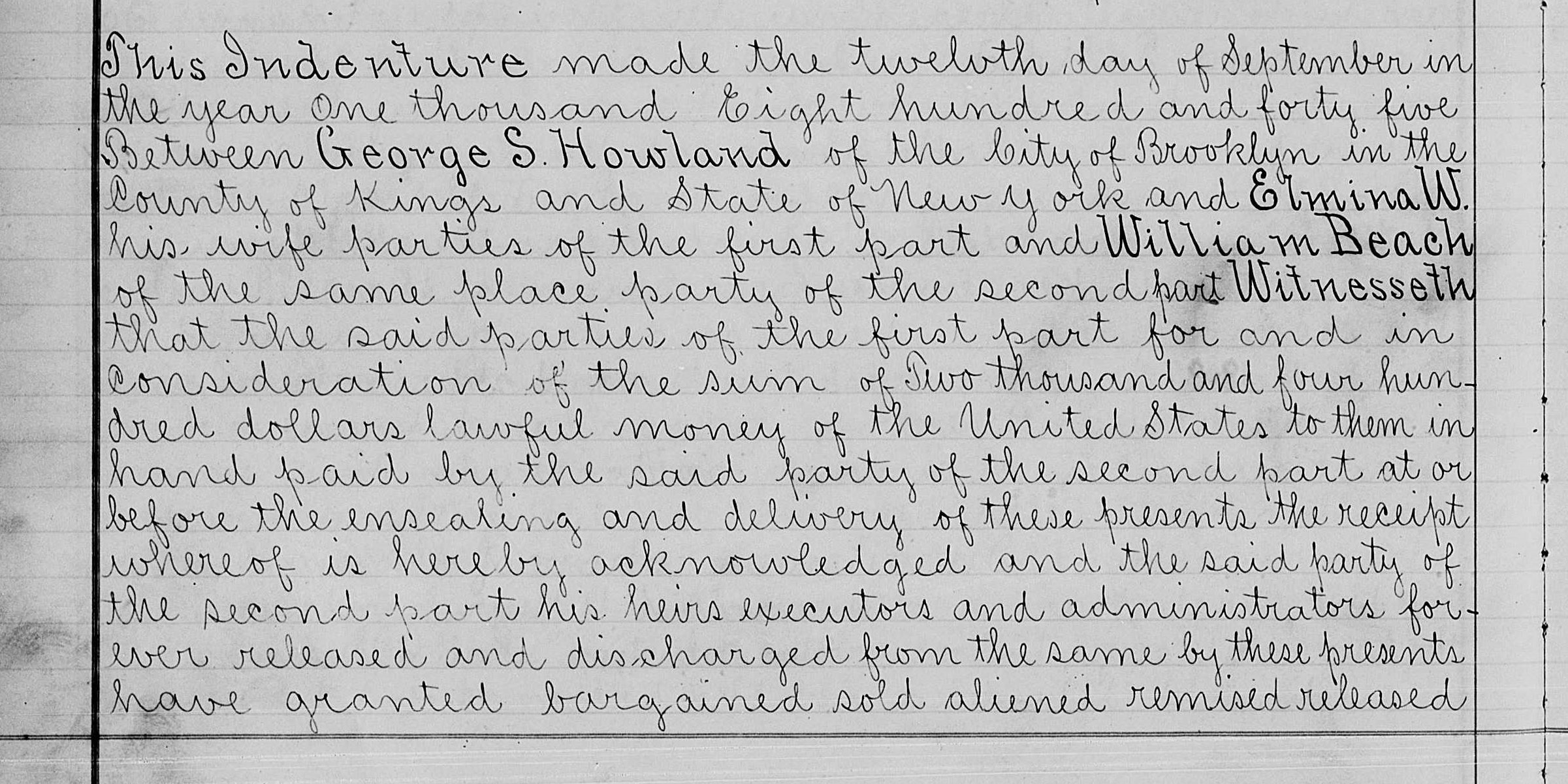
In the fall of 1845, William Beach, a Manhattan dry goods merchant living in Brooklyn, bought one of the plots of land from Howland. Beach purchased property including this house’s current frontage on Oxford Street, together with land in the back that ran all the way through to Portland Avenue. Beach paid Howland $2,400 for eight lots (nos. 241-244 & 284-287 on Ludlam’s map of the Cowenhoven Homestead).
By 1846, Beach had this house on Oxford Street built. We don’t know the architect or builder, not unusual in that era for a spec house (more on that in a minute). Usually only the most grand private houses were attributed to named architects or builders. Architecture as a profession was just starting to emerge. The American Institute of Architects wouldn’t be founded for more than 10 years after this house was built, in 1857.
Later, after a lull during the Civil War, construction exploded in a building boom across the cities of New York and Brooklyn. The profession rapidly progressed, and at the same time, the cities established building departments to regulate all the new construction. And crucially for future building historians, a trade press sprung up that reported architect and builder information that the new city departments were collecting.
That said, even without an identified builder, knowing 158 South Oxford Street’s precise construction date allows us to reference its style and level of finishes against houses of the same period, some of which do have known designers.
This house exhibits an early Italianate style typical for suburban Brooklyn villas far from the fashions of the city’s center. The front door surround and window lintels feature relatively simple moldings – just a hint of the heavier brackets starting to be seen on city rowhouses, but still a definite shift away from the Greek Revival columns, pilasters and colonnaded porches that were put on country villas in the area just a few years earlier.
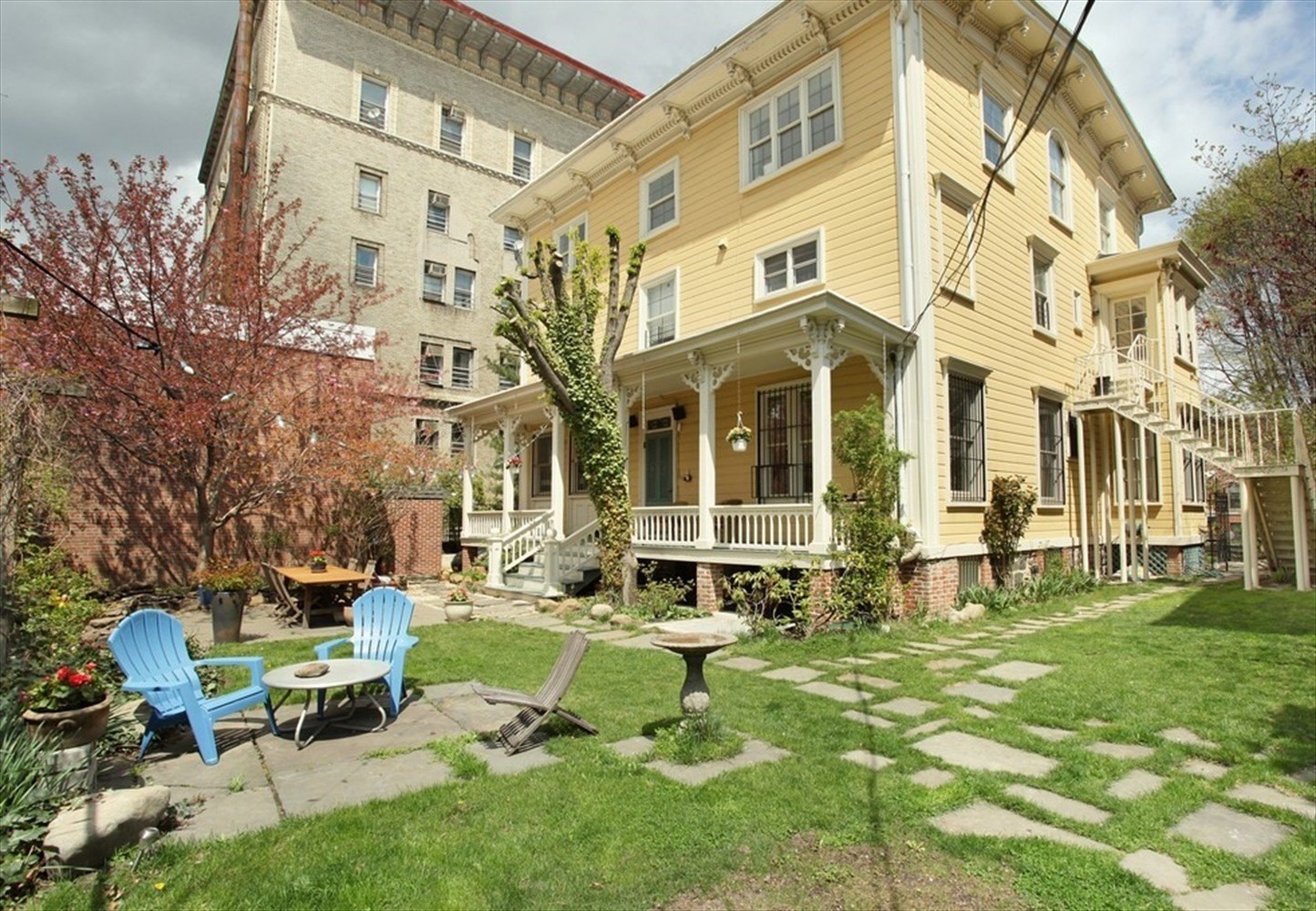
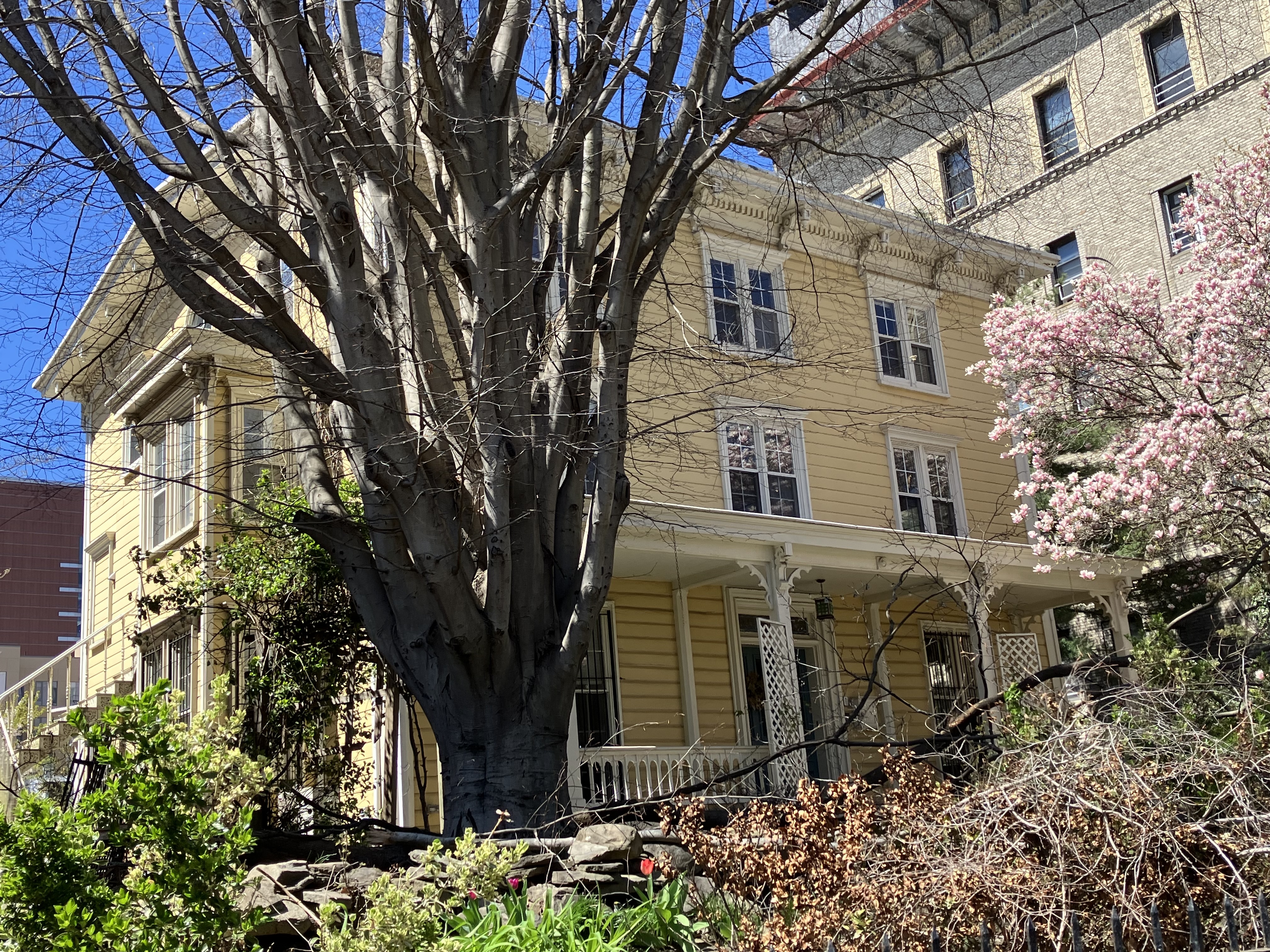
And the roofline has a gentle side gable, in keeping with the emerging Italianate style and moving away from the flat Greek Revival villa roofs. Still, the roofline is not as pronounced as the sharply peaked front gables on houses designed by leading architects like Richard Upjohn on other Brooklyn mansions in the 1840s. The cornice features some relatively modest Italianate brackets, as does the front porch, with just a few rustic gingerbread elements. The overall appearance is vernacular, not expressively designed.
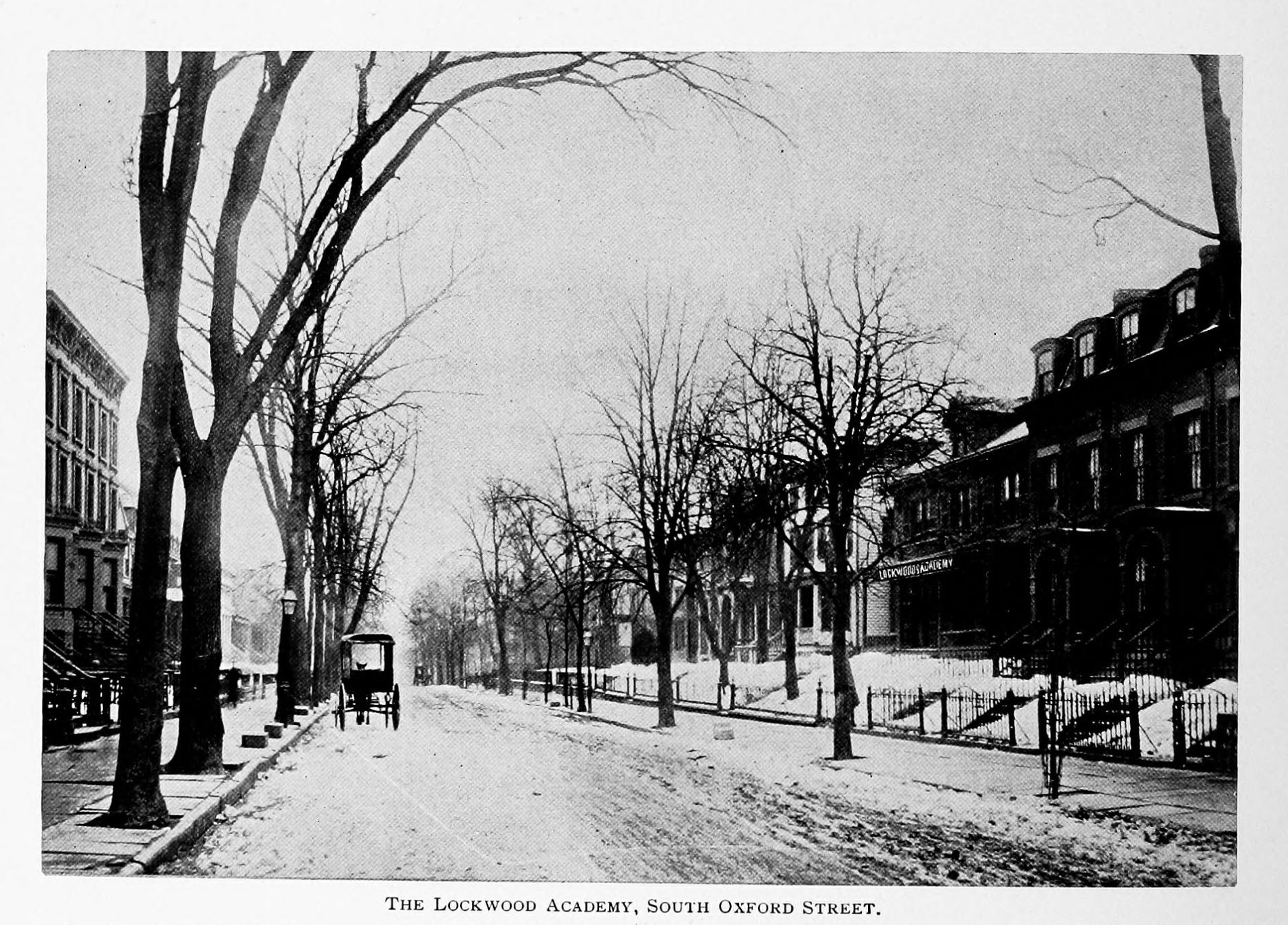
The house, together with its early neighbors, was built on a raised piece of ground, like a tiny country seat. One outstanding selling point of these suburban retreats was their sweeping views. Putting each house up on its own hillside added a little extra curb appeal. Not to mention a less-than-subtle way to emphasize proximity to fresh air, a critical aspect in an era when cholera and yellow fever were still rampant in the dense cities.
In December 1846, Beach sold the improved property for $9,000 to Leprelette H. Moore. Directories indicate Beach never lived in the Oxford Street house. That year, Beach was living about eight blocks away on Washington Avenue. Beach built the house on speculation – Moore and his family were the first occupants. Accounting for Beach’s $2,400 land acquisition cost and construction he funded with $4,000 in mortgages, we can assume Beach did very well on his investment.
Leprelette Moore, like Beach, was a Manhattan dry goods merchant. Moore, his wife Elizabeth, and their four young daughters moved to Brooklyn from Nineteenth Street in New York. Moore’s Manhattan store was on lower Broadway, first at Beaver Street and later at Cedar Street. We can imagine Moore trading his commute by omnibus from the northern reaches of then-developed Manhattan, to one in Brooklyn involving the nearby Jamaica railroad to the South Ferry at the foot of Atlantic Street.
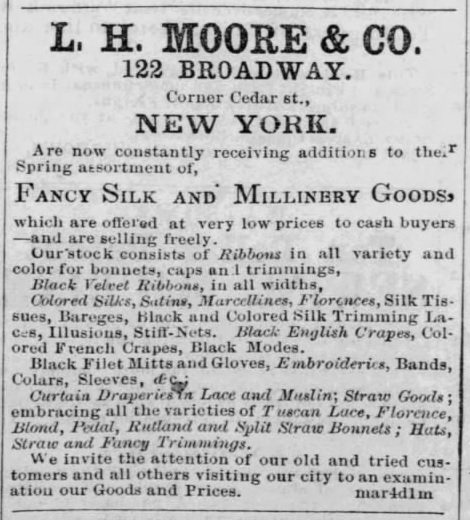
The Moores’ neighbors on this Oxford Street block, as it was originally being developed in the late 1840s, were Rev. Dr. Samuel H. Cox, long-time abolitionist pastor of First Presbyterian Church in Brooklyn Heights; Rev. Jonathan M. Rowland, another Brooklyn “New School” Presbyterian minister; John F. Trow, New York City’s leading directory publisher from the 1850s onward; and Kimball P. Colfax, a Manhattan jeweler. Cox and Rowland would’ve been familiar with George Howland, seller of their plots; his father Nathaniel had been one of the founding trustees of the Presbyterian Church in Brooklyn.
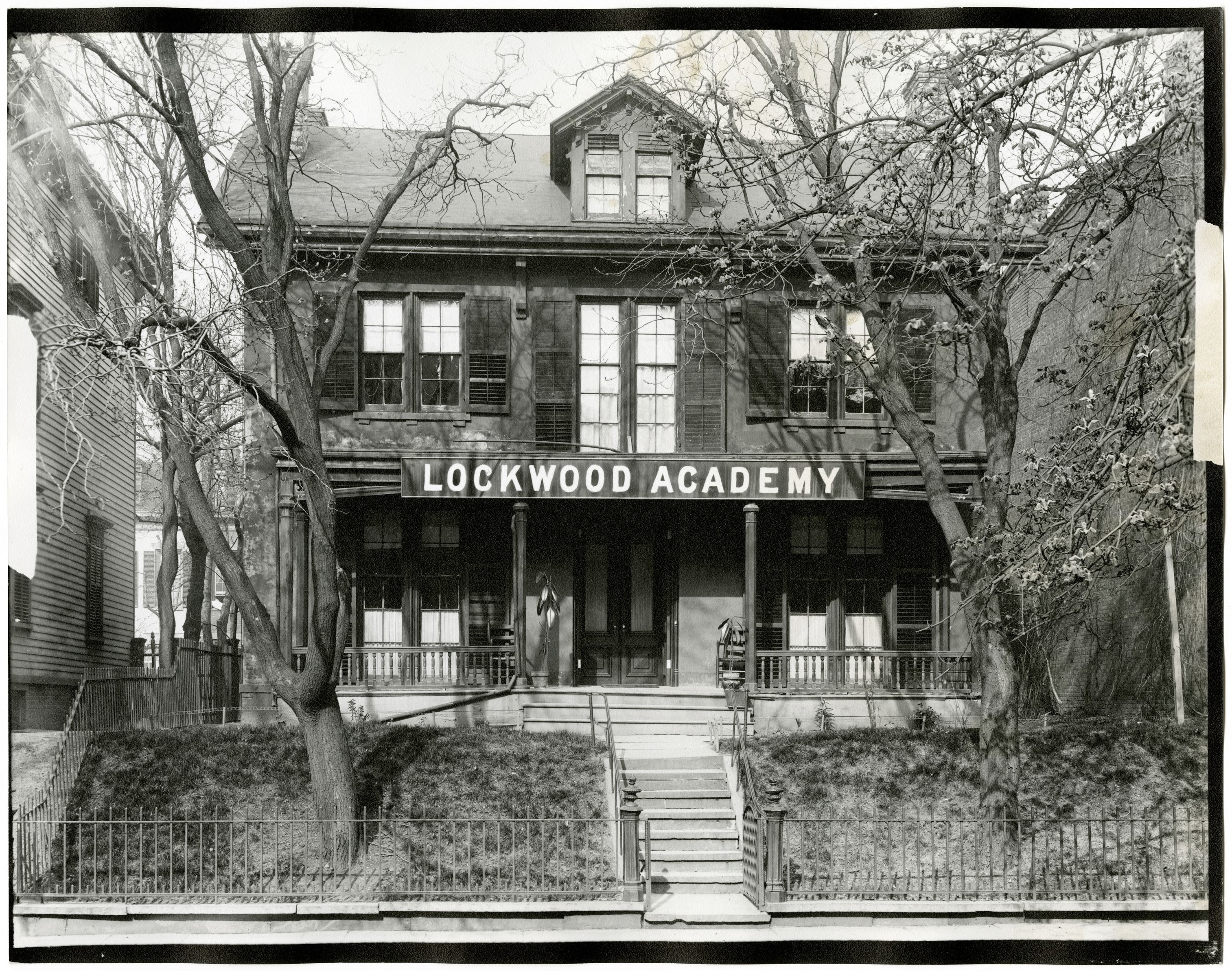
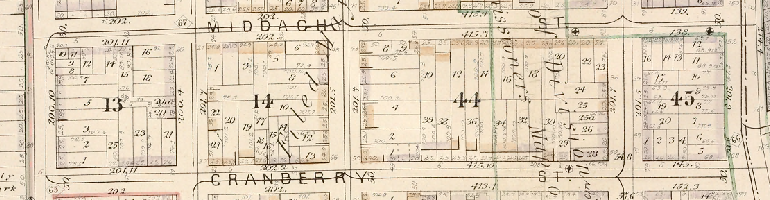
The Moore house makes its first appearance on a map in 1850. The Dripps map of that year shows the house, with its wide grounds running through to Portland Avenue and a smaller out-building at the back of the property.
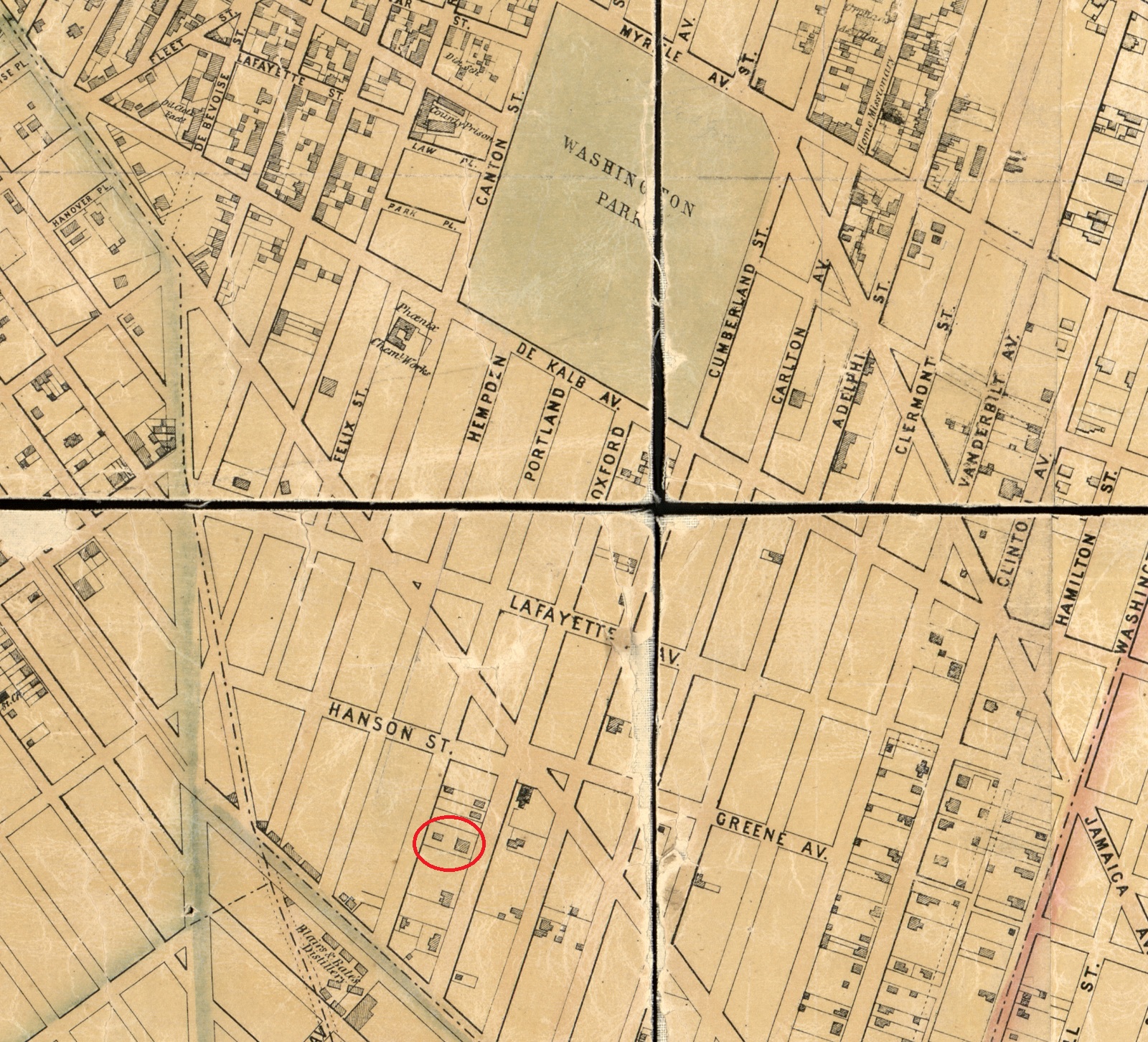
(An even earlier map from 1847 might show the property too. According to a 1990s archaeological report prepared for the city, the New York Historical library contains a map of the local area drawn by surveyor Joseph F. Bridges. The report’s citation is vague and the map hasn’t been located in the archives yet – but intriguingly, Bridges was another Oxford Street neighbor around 1850!)
This 1850 map highlights just how few buildings had yet been put up on the old Cowenhoven Homestead; this block was one of the first to be developed. The city’s 1847 directory indicates that Oxford Street, while on paper running all the way from Flushing Avenue to the Jamaica railroad at Atlantic Street, was in fact only open from Fulton to Atlantic.
The house known today as 158 South Oxford Street was definitely NOT built as a farmhouse. The Cowenhoven farm here had intentionally been turned into a subdivision. The “farmhouse” moniker is frequently but erroneously suggested these days for pretty much any mid-19th century clapboard house that survives in Brooklyn, whether freestanding like this one or rowhouse.
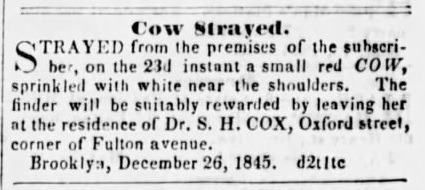
But this block, at least in the very beginning, DID have a distinctly rural flavor. The area was not yet even fully suburban, let alone the rowhouse block that it would soon become. So it’s not surprising to see this ad in late 1845 for a “Cow Strayed” from Dr. Samuel Cox’s residence on the corner. This was across the street from where Beach was just starting to build the house on Oxford Street.
The 1850 census shows the Moore family of six in the house, together with three Irish servants. Elizabeth Moore would die of dysentery in 1853. Daughter Agnes would go on to marry future Brooklyn department store magnate Andrew Jackson Nutting in the next decade. In her later years, though the rest of the Moore family had long moved away, Agnes Nutting lived at 149 South Oxford, across the street from her childhood home.
The 1855 Perris fire insurance map contains a rendering of the property similar to the 1850 map. But already, more rowhouses were starting to be built up around the original handful of free-standing houses like the Moores’ villa.
By 1856, the Moore family seems to have adopted the first house number on the block. The house became known under its original number as 124 Oxford Street, prior to later street renumbering. (Daughter Mary took out this “Lost & Found” ad in December using the new house number.) Before then, directories simply referred to houses on the block as “Oxford Street near Hanson Place.”

Around this time, the two parts of Oxford Street split by Fort Greene Park, then known as Washington Park, were officially renamed as North Oxford and South Oxford. (As were Portland Avenue and Elliot Place, originally called Hampden or Hempden Street.) This north-south nomenclature seemed more honored in the breach for at least the last several years of the 1850s.
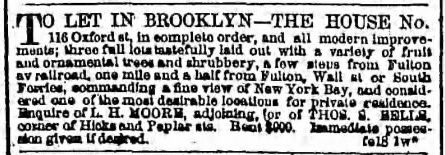
In late 1856, widower Leprelette Moore married his also-widowed, next-door neighbor, Delia Colfax. Soon after, Leprelette & Delia listed her former house for rent. The 1857 ad for the smaller house directly to the north of the Moore property paints a vivid picture of Oxford Street’s vibe in its first decade or so as a newly-developed suburban retreat:
“No. 116 Oxford Street – three full lots tastefully laid out with a variety of fruit and ornamental trees & shrubbery, a few steps from Fulton Av railroad…commanding a fine view of New York Bay, and considered one of the most desirable locations for private residence.”
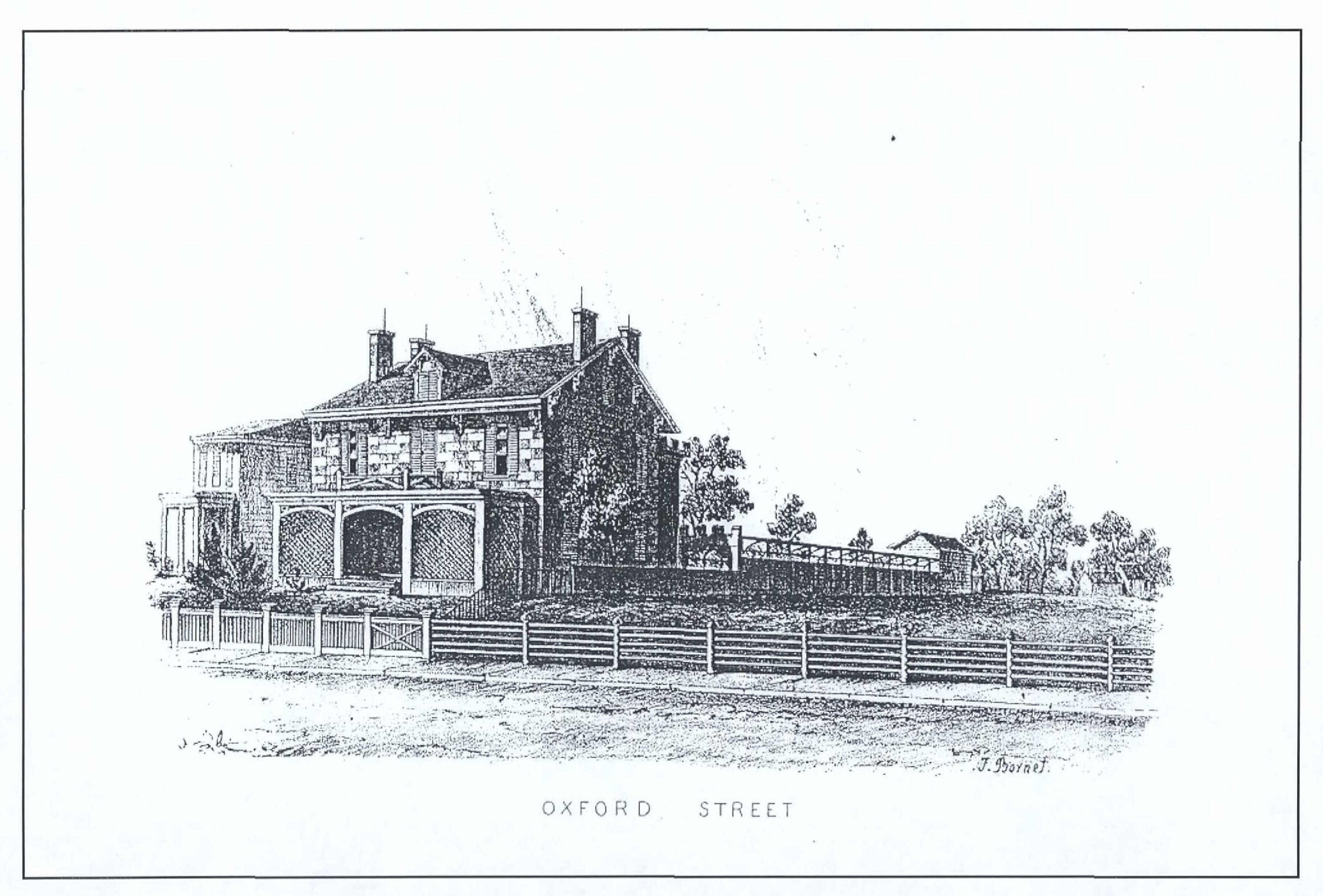
Another ad from the period has a sketch of the Trow house, three doors to the north of the Moores, showing the same bucolic scene.
In 1859, Leprelette & Delia Moore sold their house at old no. 124 Oxford Street (today’s no. 158) to across-the-street neighbor William Peet, a lawyer. Suggesting a game of musical chairs, Peet had earlier purchased the Colfax family’s original house on the east side of Oxford, when they moved next door to Moore.
Peet paid the Moores $13,500 for an 80-foot x 115-foot portion of the property, including the house. (Moore didn’t sell Peet the back half of the plot on Portland Avenue. That land was later developed as a separate house.) The next year, Peet paid the Moores another $1,700 to buy the north side yard of Moore’s original plot, another 20 feet of frontage on Oxford Street, bringing the property to its current dimensions.
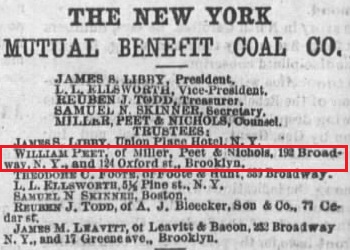
Peet’s family were long-time Brooklynites – his father Frederick Peet bought one of the first villas put up on Brooklyn Heights in the first decades of the nineteenth century. William Peet lived in his father’s house until 1853, when he bought the Colfax’s original house on Oxford Street. Peet would be another block resident very familiar with real estate speculator George Howland; Peet was a teenager when Howland built several rows of brick townhouses on Columbia Heights directly across the street from the Peet mansion.
Maybe Leprelette and Delia Moore left Oxford Street because they preferred its original country feel from when they both moved there about 10 years before. By the end of the 1850s, that earlier era had been lost to rapid development. The Moores moved to a country estate in South Norwalk, Connecticut.
William and Martha Peet lived on Oxford Street for another seven years. The 1860 census records them in the house with four kids just like the Moore family, plus two other members of Martha’s family, and an Irish cook and servant. William practiced law in Manhattan and was another commuter.
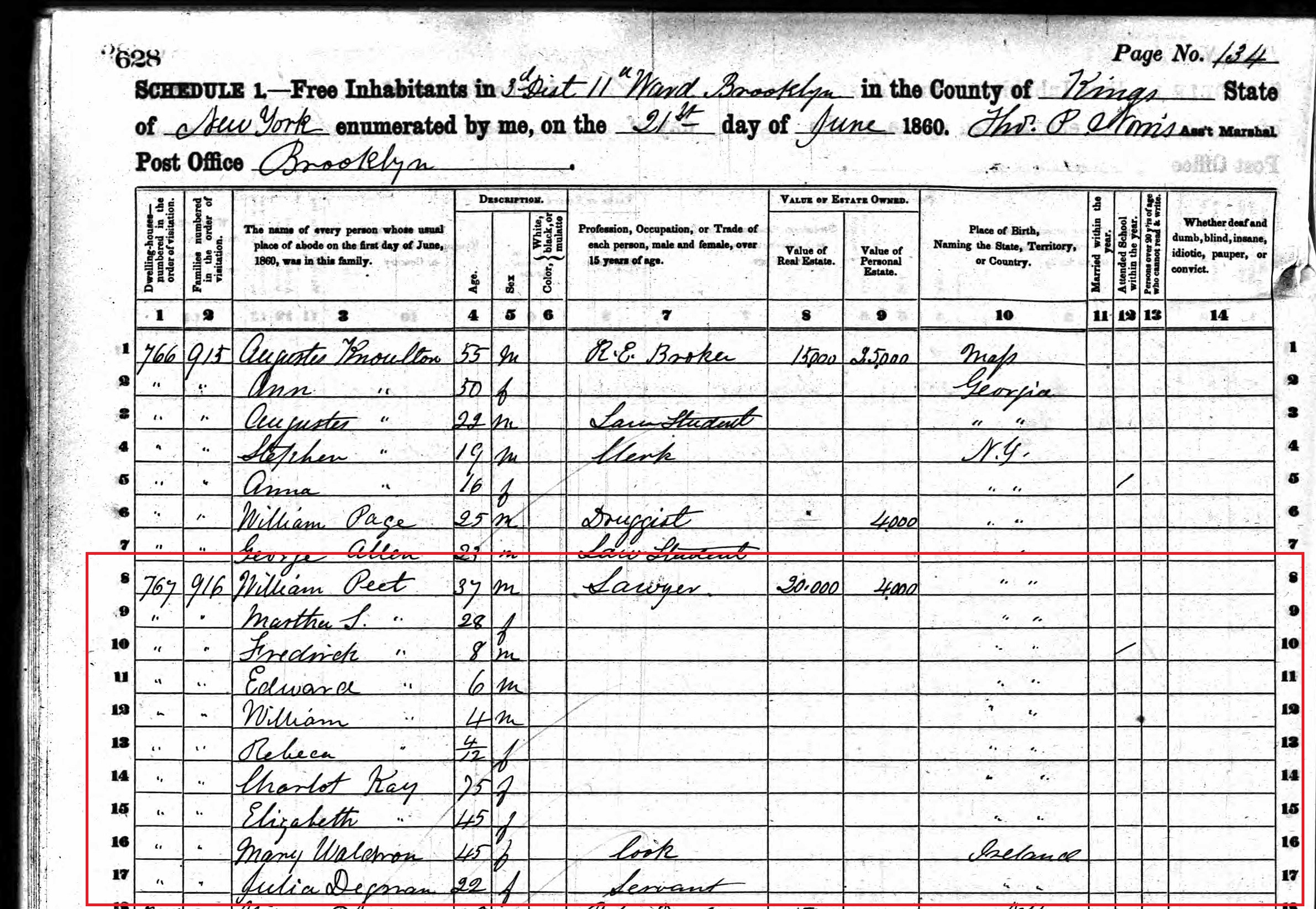
The Peets sold the house on Oxford Street in 1866 to William N. Seymour for $18,000. The Peets received a tidy profit for their tenure, considering that for most of this time, the local property market was quiet during the Civil War. The appreciation shows their sale timing was good. Real estate was starting to recover after the war, with a new building boom underway, and the financial panics of the early 1870s were not yet on the horizon.
Seymour was a New York hardware merchant who relocated to Brooklyn from Yonkers. Seymour and his family lived at the house until he died there in 1881. By this time, the house (along with every Brooklyn building in 1870), had been renumbered to its current address of 158 South Oxford Street.
In 1885, Seymour’s estate sold the house to Henry Maddock for $23,500.
More to come on the close connection between transit evolution and real estate development on this block, in part 2 of this post.
The Maddock family’s era – and beyond – at 158 South Oxford Street will be continued in part 3.


