A Rowhouse Built in the Late 1840s with a Series of Long-Time Owners; Reconfigured into Multi-Family Housing before World War II; and Converted Back to Single-Family in the 1990s
(adapted from the 2024 Brooklyn Heights Designer Showhouse journal, published by the Brooklyn Heights Association)

182 Clinton Street’s Origin Story
The small farms and estates in what today we know as Brooklyn Heights began to give way to buildings in the early 1800s. But it would take almost 40 years after the initial era of construction for the area that now includes 182 Clinton Street to be developed. The building’s location, in the neighborhood’s southern end close to Atlantic Avenue, made it among the last places where houses were built. The economic boom and bust and the fights over real estate development in the area should sound familiar to any present-day New Yorker.
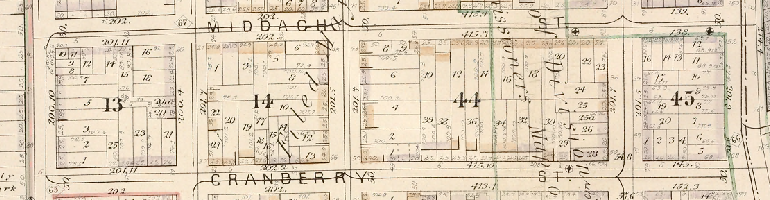
In the early years of the nineteenth century, the site was part of a 150-acre farm owned by Ralph Patchen, whose land straddled what is today the southern boundary of Brooklyn Heights. Nearby, at the foot of Atlantic Avenue, a new ferry to Manhattan began operating in 1836. However, even before ferry service actually began, it fueled local real estate speculation: Patchen started selling lots from his farm in 1829, and the portion of his property where 182 Clinton would eventually be built traded hands five times in just seven years. But land sales didn’t lead to construction, at least not right away. One of the main obstacles was another landowner, Teunis Joralemon, Patchen’s neighbor to the north.
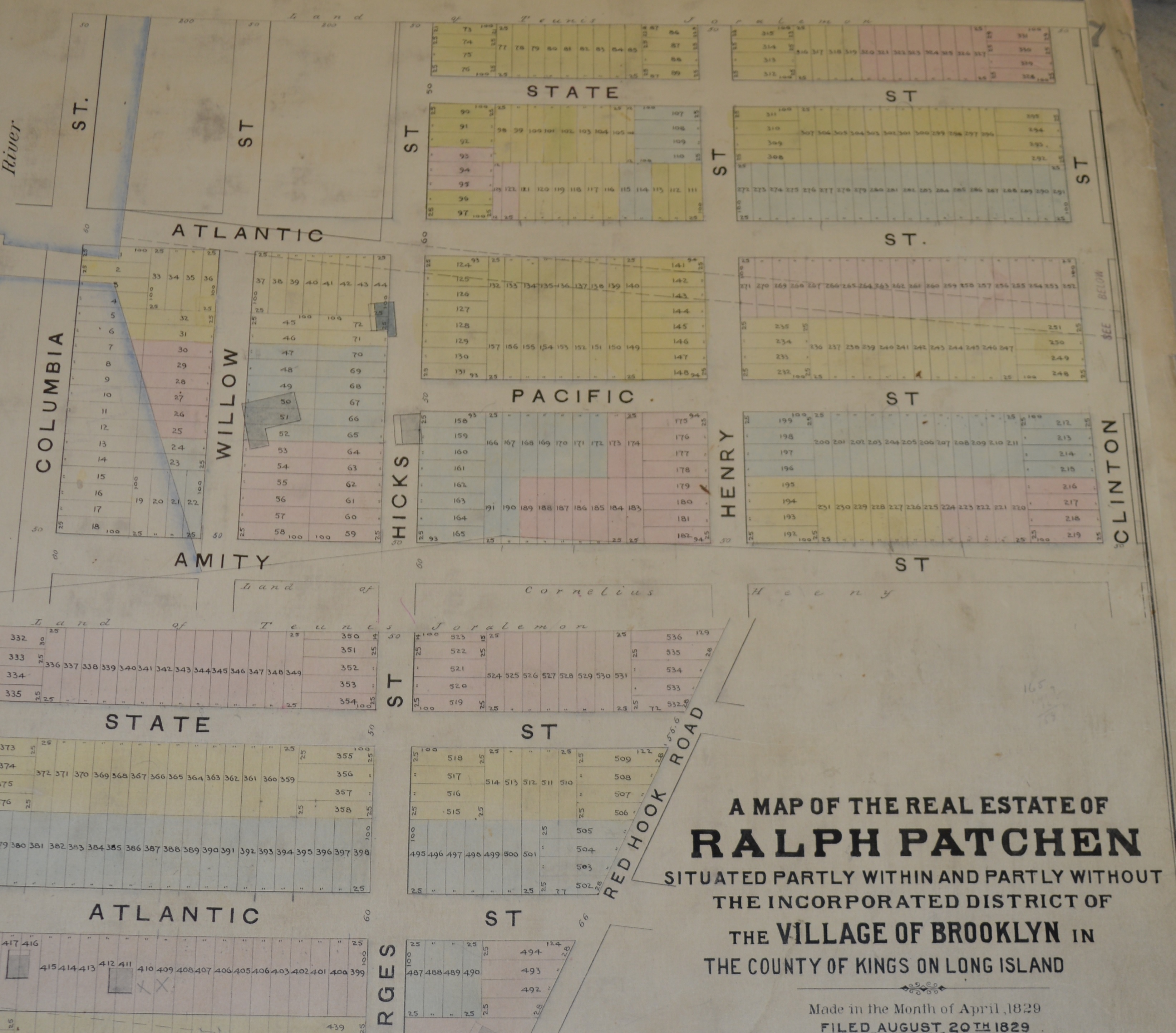
Fiercely anti-development, Joralemon owned an equally large tract, the former Philip Livingston estate. Purchasers of Patchen’s land did manage to put up a few rows of houses on State Street, near 182 Clinton. But Joralemon stymied larger-scale building efforts, and by maintaining his land as a farm, he isolated the Patchen blocks from the rest of developed Brooklyn and made them less desirable.
Worse, the Long Island Rail Road opened a spur down Atlantic Avenue in 1836, the operation of which was unpleasant at street level. On top of that, a financial panic in 1837 caused a national depression. It wasn’t until 1844, after strenuous lobbying from nearby property owners, that the LIRR buried the Atlantic line in a tunnel. Arguably, this makes it the world’s first subway, almost twenty years older than the London Underground!
Meanwhile, Teunis Joralemon died in 1841. His property was divided among his six daughters, and development soon followed. His daughter Margaret married a builder named John Dimon, who put up many houses on lots belonging to the Joralemon sisters.
By the mid-1840s, conditions in the south Heights had changed substantially: the Joralemon estate was being developed, the LIRR Atlantic line had been tunneled over, and the financial panic was receding. Many of the property owners on the old Patchen farm decided the time was finally ripe to build.
182 Clinton Street Is Built for Dr. Isaac Wood in the Late 1840s
Dr. Isaac Wood was a prominent New York City physician, the first medical resident at Bellevue Hospital and a founder of the New York Institution for the Blind. In 1836, he had jumped into the speculative Brooklyn real estate market, buying a quarter-acre plot of the old Patchen holdings. More than a decade later, in 1847, he decided to start developing his land, which included today’s 182 Clinton Street. He had six brick houses built as investment properties, five on Clinton Street and one on State Street. Circumstantial evidence suggests that John Dimon was the builder of at least some of these houses.
Wood’s townhouses were built in the Greek Revival style, late in the period of the design’s popularity. Houses of this era often had modest exterior ornamentation. 182 Clinton’s front door and windows originally would have been topped by simple three-part projecting lintels, like those seen today on the neighboring houses. Here, the brownstone lintels are even more spartan, having been shaved flat in a renovation. The house was built without any columns, pilasters or pediment. Arched double doors at the front and in the vestibule, reminiscent of the Italianate style, are most likely relics of another renovation. They would have replaced a more typical Greek Revival rectangular entry with single doors, transom and side-lites, like the one at No. 180 next door. The same renovation was probably responsible for the house’s current Italianate-style bracketed cornice, which would have replaced a slimmer dentil cornice like the one at No. 180.

Clinton Street was known as a “Doctors Row” in the 19th and early 20th centuries, so it’s not surprising that Wood’s first lease on 182 Clinton went to Dr. Thomas Sinclair, local general practitioner. Several subsequent owners or occupants were doctors, practicing at nearby Long Island College Hospital or out of an office in the house itself. Wood cashed out on his investment after about five years. In 1853, he sold the row of three homes at 180, 182 and 184 Clinton Street to women from the Fake family, prominent upstaters from the Troy area. Wood’s final tenant at 182 Clinton Street in 1852 had been Dan W. Kellogg’s family, and Kellogg’s wife Catharine Fake bought the house the following year.
The House Changes Hands For the First Time In the 1850s
The following two decades were probably the most tumultuous period for 182 Clinton Street. Catharine Fake Kellogg died within a year of buying the house. Her husband Dan and their infant son Augustus lived there for a short while longer, but the 1855 census says the house was unoccupied. The young Augustus Kellogg died in 1856, and ownership of the house passed to his father.
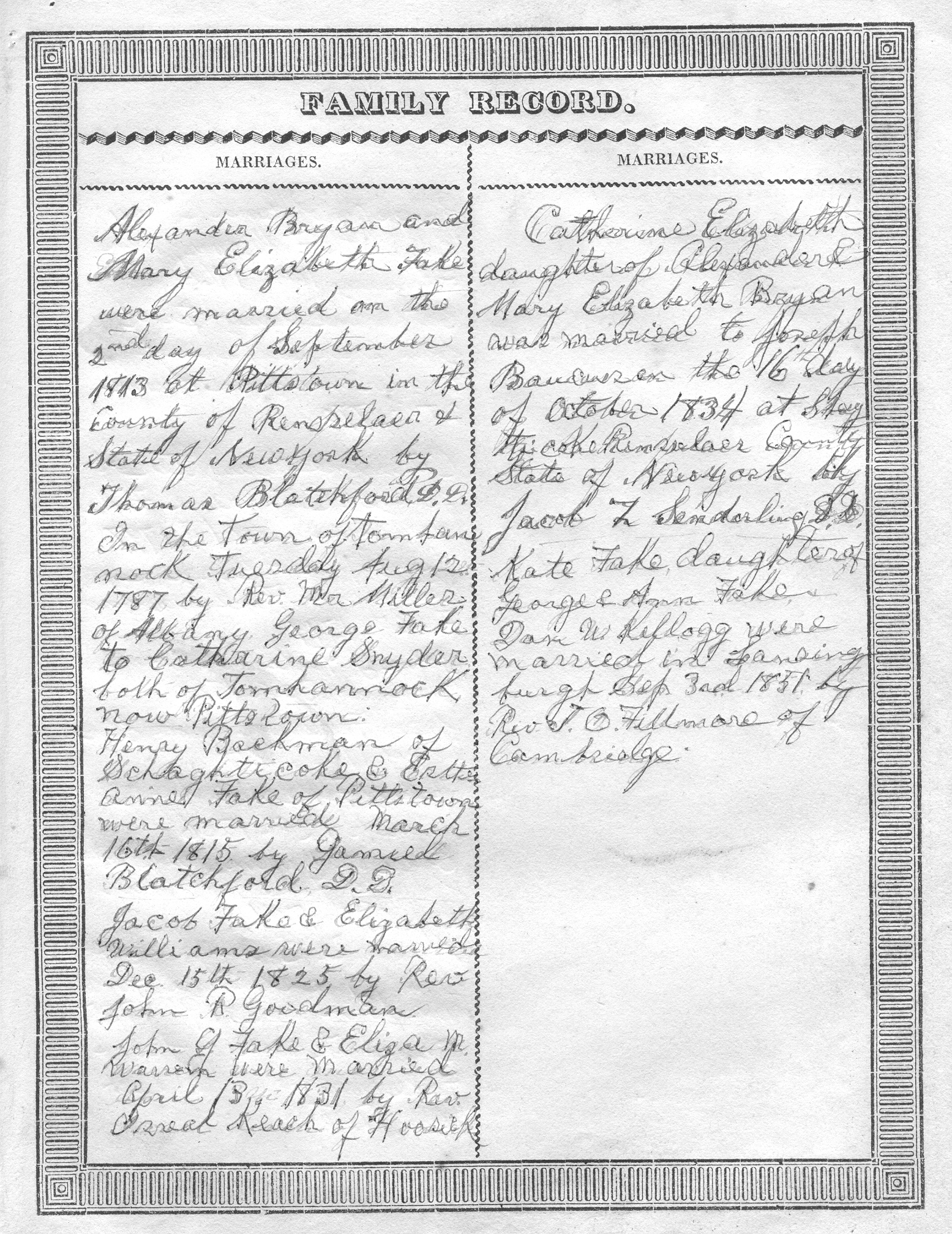
Dan Kellogg had made a fortune in frontier Michigan in the early 1830s but lost it in the 1837 panic. If he had regained his financial footing by the early 1850s when Catharine bought 182 Clinton, his situation seems to have remained precarious. When Dan remarried Emma Congdon in the late 1850s, he had the house transferred into her name, presumably to protect against potential business reversals. Directories show Dan and Emma lived at 182 Clinton with their young daughter Emma Louise for at least a few years through the early 1860s. But in 1867, he took out an ad offering the house for lease, saying “the owner wishes to make arrangements to board (man, wife and daughter of 8 years) towards the rent.”
It’s doubtful that Dan pulled off his scheme to board with his tenant, because the Kelloggs never appear to have lived at 182 Clinton after that. By 1870, Emma and her daughter had moved back to live with her parents, without Dan. Any idea to protect the house from creditors failed, because Emma had taken out a mortgage in her name, and defaulted. In 1878, the lender foreclosed, and 182 Clinton was sold at auction.
A New Owner in 1878, and House’s First Major Renovation
Annie Peterson bought 182 Clinton at the 1878 foreclosure auction. She owned several small boarding houses nearby on Sidney Place, and State and Clinton Streets. With her daughter and son-in-law, Peterson moved into 182, leasing part of the house to a doctor.

Two years later, a brief notice in the trade publication Real Estate Record and Builders’ Guide reported that a “Mrs. Peterson” had obtained a building permit for 182 Clinton to be “raised two and one-half ft.” Peterson reduced the roof’s pitch, adding more ceiling height to the top floor rooms. This is certainly when the current cornice was added to the house, and most likely the current front entryway too. (The Italianate cornice and door may have been on the trailing edge of fashion by 1880, but the idiosyncratic stoop ironwork could be a riff on the up-and-coming Neo-Grec style.)
1884: The Burnham Family Begins 50+ Years of Residence
In 1884, a new doctor moved into 182 Clinton, leasing the entire house. Dr. Clark Burnham had already been practicing as a surgeon and gynecologist for several years a few blocks north on Clinton. Now at No. 182, Clark married Matilda Spelman in 1888, and their family began occupancy and later ownership of the house for over 50 years.
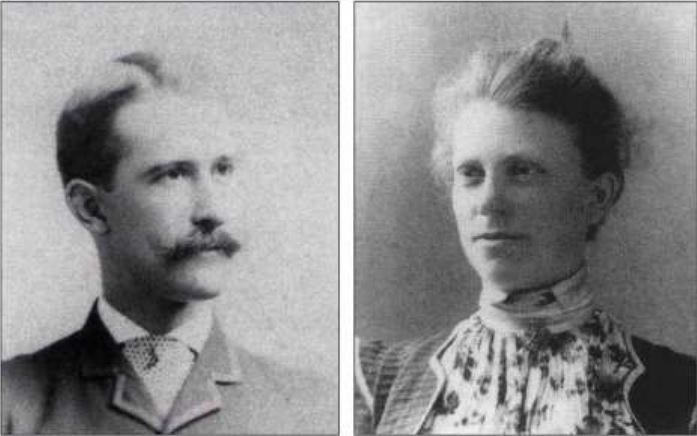
Clark and Matilda had deep connections to Brooklyn Heights. Clark’s uncle had co-founded Journeay & Burnham, 19th century Brooklyn’s largest dry goods emporium. The firm’s long-time store was located on Atlantic Avenue two blocks away from 182 Clinton. Matilda’s father William Spelman was one of the neighborhood’s wealthier merchants, and she grew up in a mansion (now demolished) on Willow Street.
Peterson continued to rent 182 Clinton to the Burnhams until 1908. That year, she sold the house to Matilda. By this time, the Burnhams were raising six children there, including eldest daughter Lois, who would graduate from nearby Packer Collegiate Institute a few years later.

Clark & Matilda continued to live in 182 Clinton for decades. Around the time that Matilda died in 1930, Lois had moved back into her childhood house with her husband Bill Wilson. Bill’s chronic alcoholism and the 1929 stock market crash had left Bill & Lois unable to support their own household. In 1934, sitting at the kitchen table at 182 Clinton, Bill conceived the 12-step program to achieve sobriety, which he later dubbed “Alcoholics Anonymous.”
With the Depression still ongoing, Clark was forced to sell the house in 1935. Lois and Bill Wilson remained as tenants for a few more years, but eventually couldn’t afford the rent and had to move out.
182 Clinton Becomes a Three-Family House in 1939, a Four-Family House in 1956 and Back to Single-Family in 1992
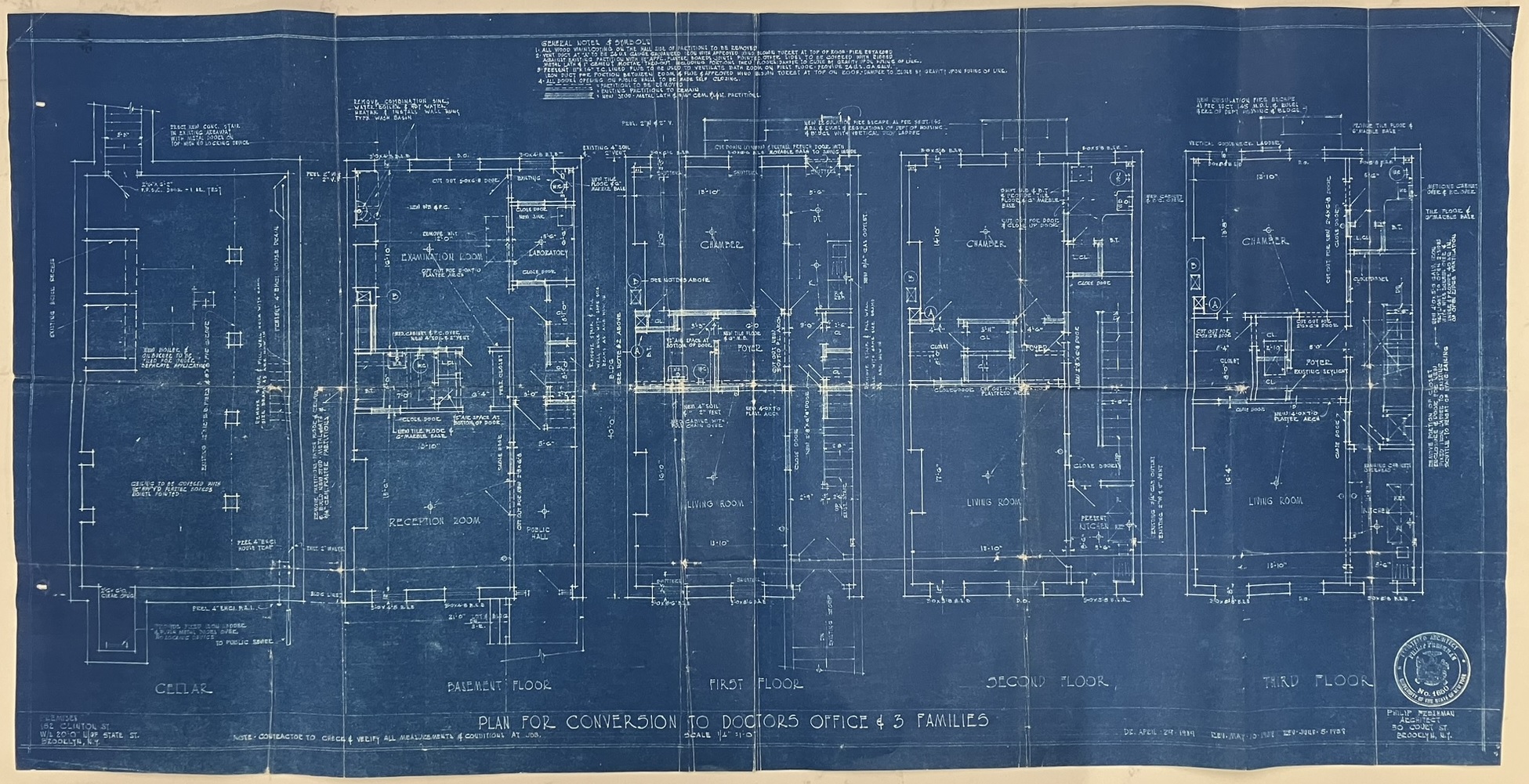
Charlotte Wernick bought 182 Clinton from a real estate flipper in 1939. She hired local Court Street architect Philip Freshman to convert the four-story house into three separate floor-through units with a basement doctor’s office. The photo taken in 1940 for the New York City tax department’s real property survey shows the front lintels had been shaved flat by this point. Census records that year show Charlotte and husband Nathan living in one of the three new units.
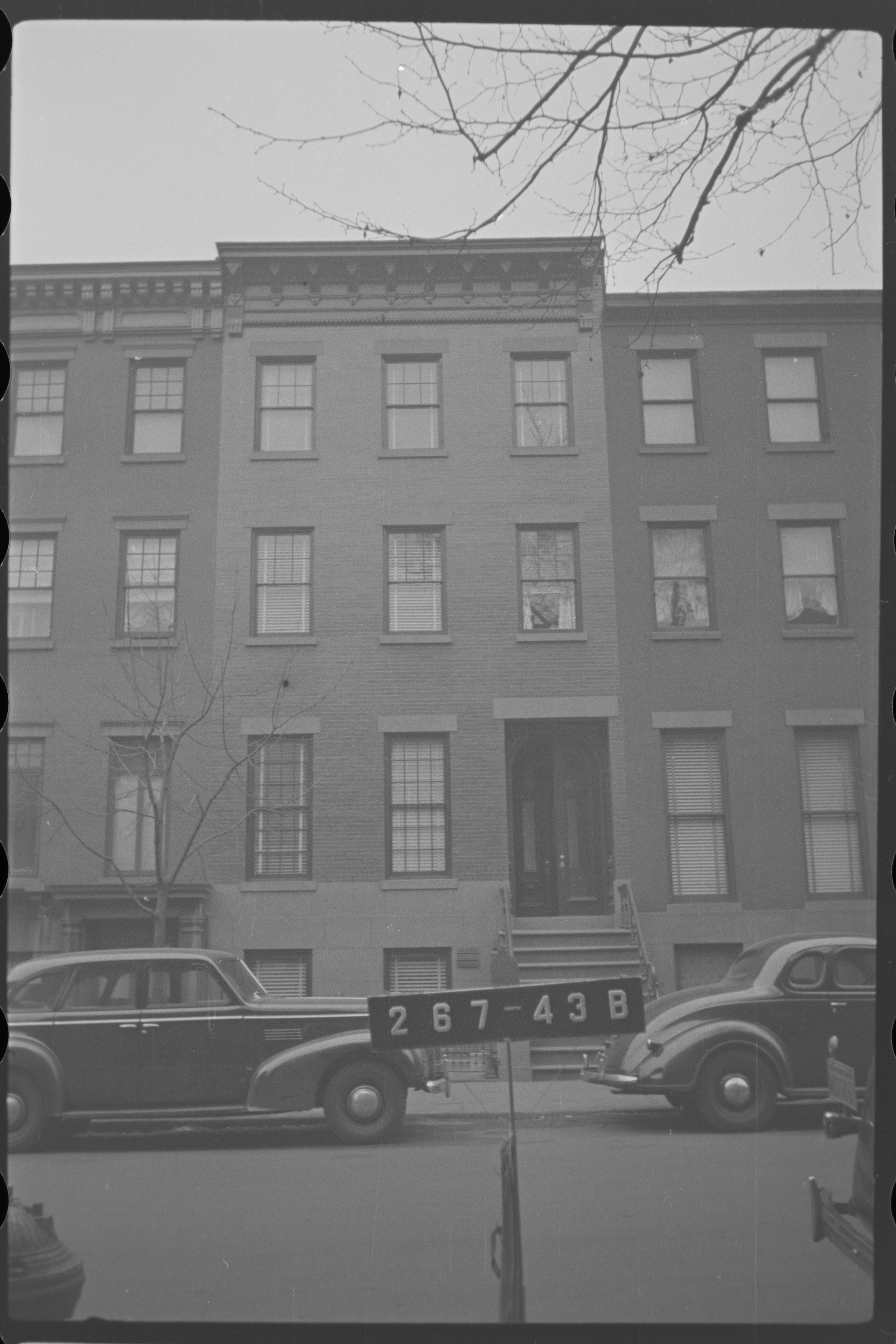
By 1950, the Wernicks had moved out of 182 Clinton. Newspaper accounts show one tenant in this period was Emanuel Levenson, who started the Penny Bridge Opera Company from his home (a nod to the famous 19th century bridge over the Montague Street ramp down to the waterfront). Levenson ran his first music school from the house, later becoming a nationally known music educator and promoter of youth music programs.
From the fifties through the seventies, 182 Clinton was owned by a series of investors. In 1956, one of these owners eliminated the basement doctor’s office and converted the house to four units. By 1992, the house received a new certificate of occupancy to formally convert it back to the single-family home it is today.
Brownstoner’s Susan De Vries has also written a superb history of 182 Clinton Street – be sure to check out the amazing photos she dug up of the Burnham family in the house!
 Old Brooklyn Heights