By Jeremy Lechtzin
The house at 1 Monroe Place has seen its fortunes rise, decline and rise again over its 175-year history. By the standards of mid-19th century Brooklyn Heights homes, it had relatively modest beginnings. During the Gilded Age, the house was substantially expanded and upgraded. After being turned into a boardinghouse in the early 20th century, the building was converted into apartments and eventually saw a long period of disinvestment. Nearly demolished at the beginning of this century, the house has now been rescued, with the interior reimagined and the exterior restored to its most glorious era.
1 Monroe Place was built in the early 1850s for Samuel Bell, a Manhattan merchant. Originally, 1 Monroe Place was three stories tall, designed in a late Greek Revival style. It was a simpler, smaller house than today, with no Mansard roof, no rear extension, and no bay windows overlooking Clark Street.
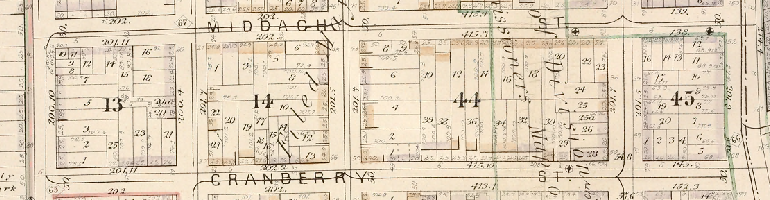
Bell bought the land at the corner of Monroe Place and Clark Street in December 1848. However, no house appears at this site on a Brooklyn map from 1850. And no one at this location was recorded in that year’s census. City directories first show occupants living at this address starting in 1852, which is the best estimate for the exact year when the house was built.
We don’t know why Bell appears to have waited to build even as the rest of the block was already developed. Maybe he delayed until the now-demolished church across the street was completed. (The progress of the Church of the Restoration was documented in contemporary newspapers as “slow-going” having started in 1848 and not finished until 1850.) Or maybe he just didn’t have the money. Bell’s background is little-documented. He may be the same Manhattanite Samuel Bell who had been investing in Brooklyn real estate since the 1820s.
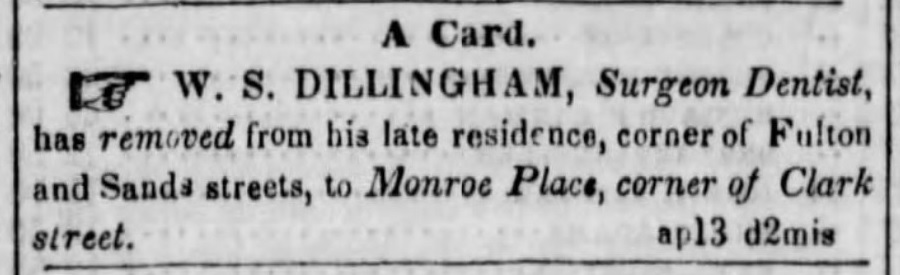
Samuel Bell never lived in the house and instead offered it as a rental. (It was quite common in that period to lease an entire house.) The first known tenant was a Brooklyn dental surgeon named William Dillingham, who ran his practice from the house. Based on directory listings, Dillingham took in boarders, the first of whom was merchant Samuel West.
Bell died within a couple years after the house’s construction. His daughter Elizabeth and her husband David Barker then bought the house from Bell’s estate and lived there for about a decade. David Barker was a portrait artist and gallerist in Manhattan.
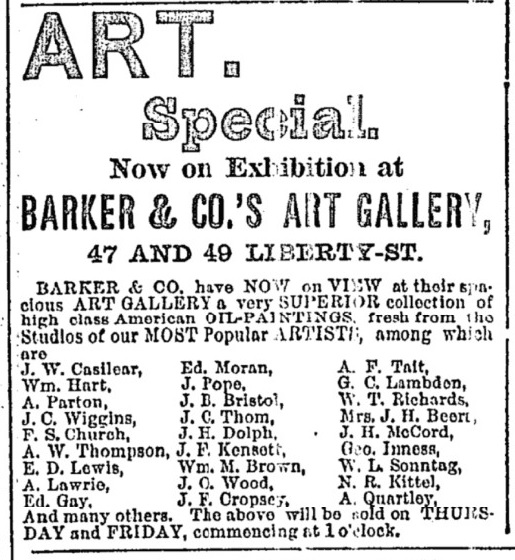
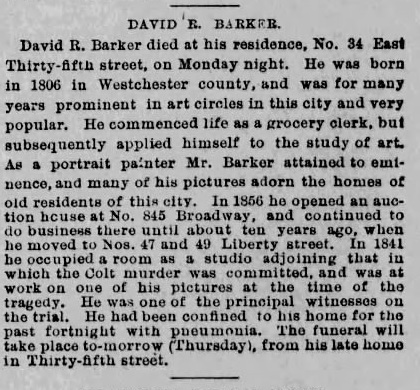
A newspaper ad from 1859 shows 1 Monroe Place was put up for auction. But the house didn’t sell, and the Barkers continued to live there through 1863. In the following year, the Barkers sold the house to Thomas and Sarah Strong. They lived in the house for about five years. Little is known about the Strong family’s time there.
(Thomas Strong had a curious career years after he moved out of 1 Monroe Place. Newspaper ads in the 1880s show him hawking baking powder from an office at the corner of Clinton & Montague Streets. Later ads described him as the “sole agent for the Turtle Telephone Device Company.”)
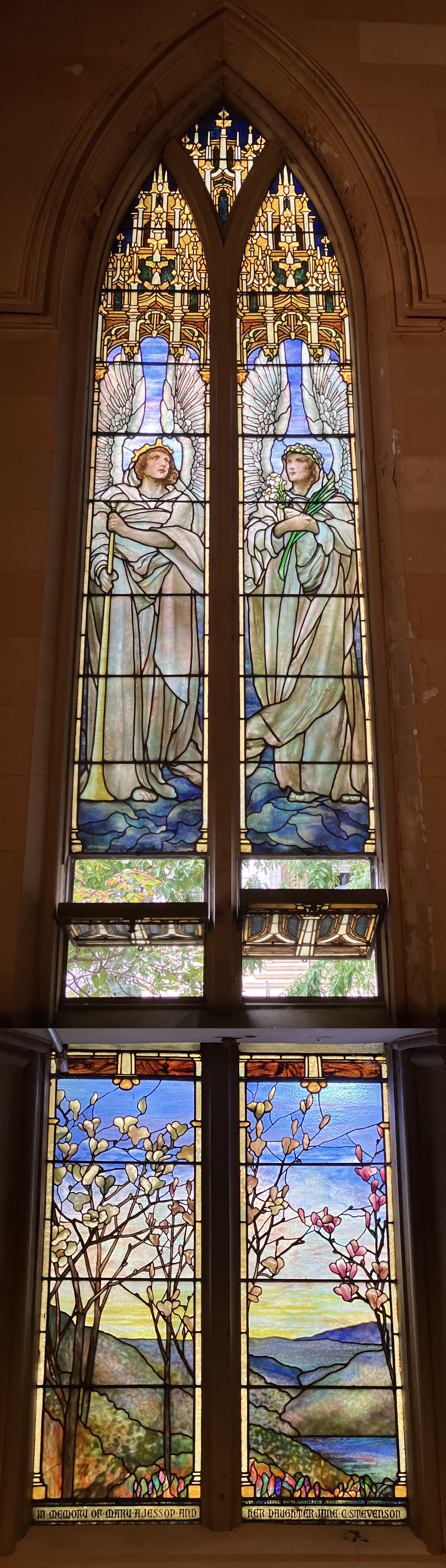
Mary Jessop, the widow of a steel magnate, bought the house for $25,000 in 1868. Mary had inherited a large fortune when her husband Henry died at age 40 two decades earlier. His family owned the Sheffield Steel Works in England and Henry had established the firm’s New York branch.
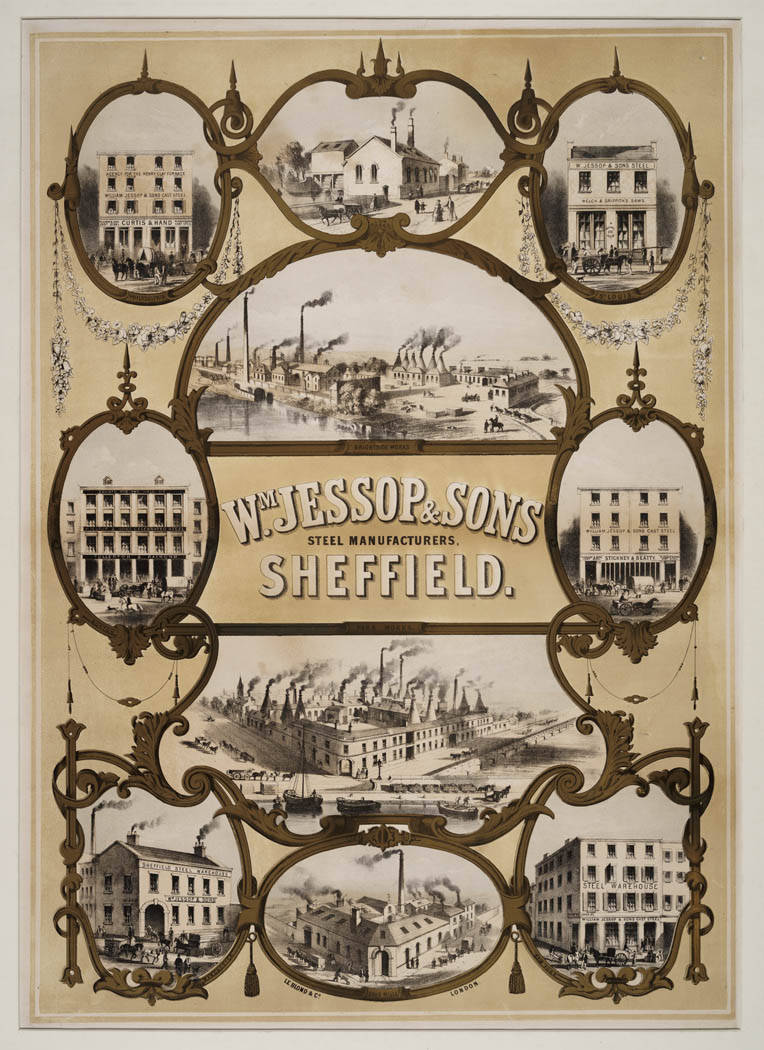
Mary Jessop lived at 1 Monroe Place for over 20 years. Daughter Jane and her husband Henry Stevenson, together with their three sons, shared the home with Mary – and four live-in servants, befitting Mary’s wealth.
In 1881, Jessop hired architect John Mumford to add the distinctive Mansard roof to the house, featuring slate tiles and delicate iron cresting. A year earlier, Mumford had worked on the church just across the street from 1 Monroe Place. He converted the parsonage into an extension of the famous Ovington Brothers China store at the corner of Clark and Fulton Streets one block away.
The Ovington commission was typical for Mumford, a very prominent architect in 1870s and 1880s Brooklyn. He designed several mansions in fashionable Clinton Hill, and civic projects in Downtown like the old Municipal Building. Hiring Mumford would suggest Jessop could afford a top-of-the-line renovation.
Jessop’s alterations significantly expanded the house’s size by adding the fourth story and an extension in the rear. With its spacious new interior, fancy design and prominent corner location, the house had turned into a true Gilded Age mansion.
Mary Jessop died in 1889, and her daughter Jane Stevenson died in 1893. Jane’s three sons had still been living at 1 Monroe Place, but after her death, they moved to the St. George Hotel and closed up the house. A year later, they auctioned off the house’s furnishings, described in a news report as “old fashioned, solid and rich in variety” – China, oil paintings, engravings and furniture sold for thousands of dollars.
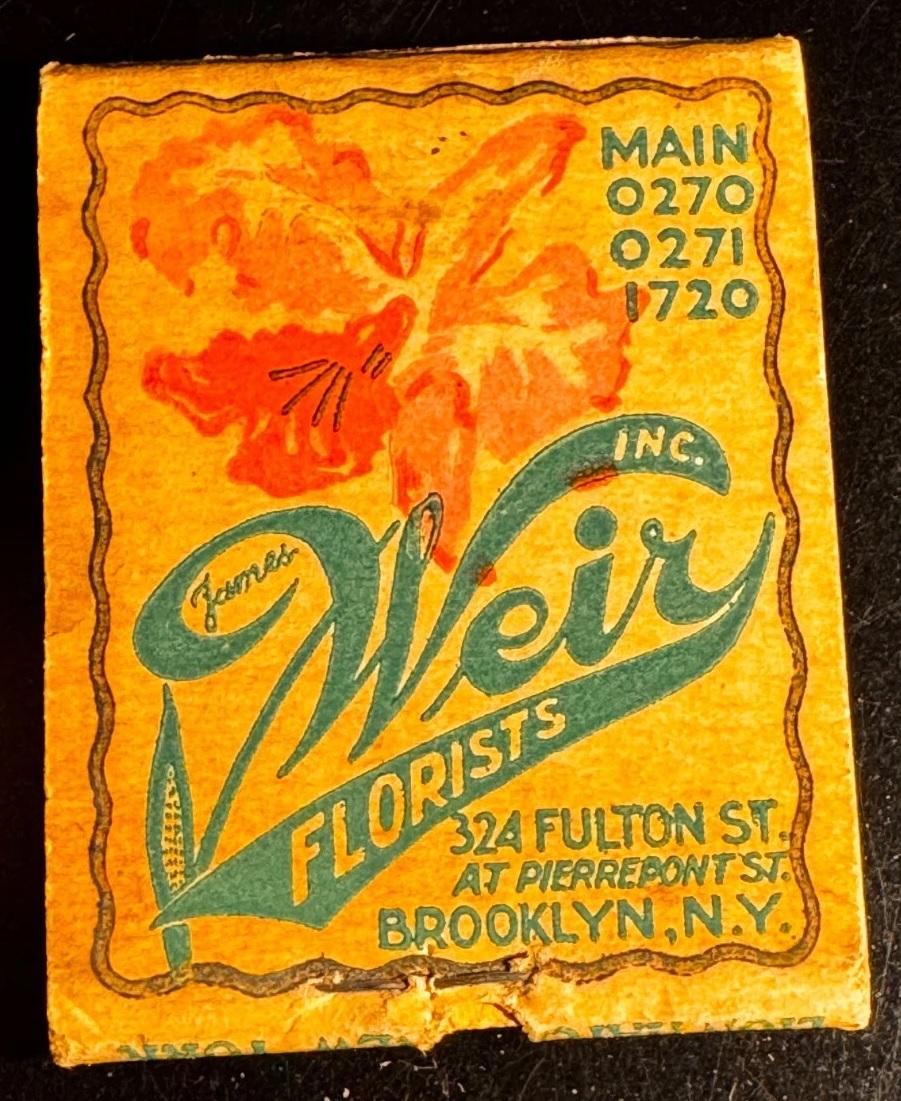
Agnes Weir bought the house at 1 Monroe Place from the Jessop and Stevenson estates in 1895, getting a bargain at just over $16,000. Her husband John R. Weir ran the florist business known as “James Weir & Son” which had been founded by his father James in Bay Ridge in the 1850s.
(According to family legend, pioneering Brooklyn horticulturalist James Weir coined the “Bay Ridge” neighborhood name mid-century when fancy newcomers who were establishing country villas there – landscaped by James – complained its then-existing name of “Yellow Hook” wasn’t becoming of their stately digs.)
At the time the Weirs bought the house at 1 Monroe Place, James Weir & Son operated its flagship shop in Brooklyn Heights, at the corner of Fulton and Pierrepont Streets. The Weir shop had just added an elaborate greenhouse to the back of the building on the Pierrepont side, capitalizing on the horticulture and greenhouse craze following the World’s Columbian Exposition in 1893. James Weir & Son continues in business today, having moved to Montague Street in the 1950s under new owners.
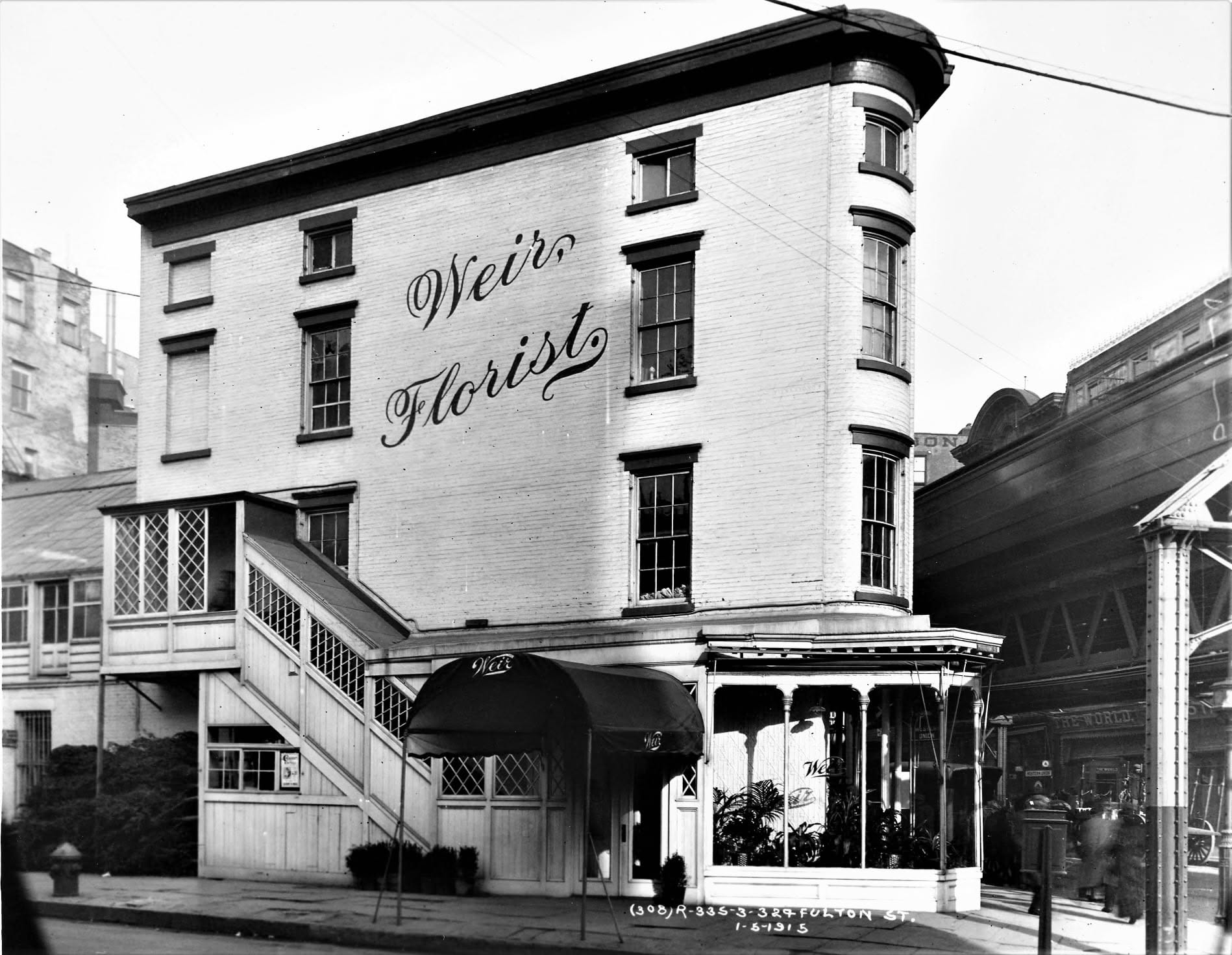
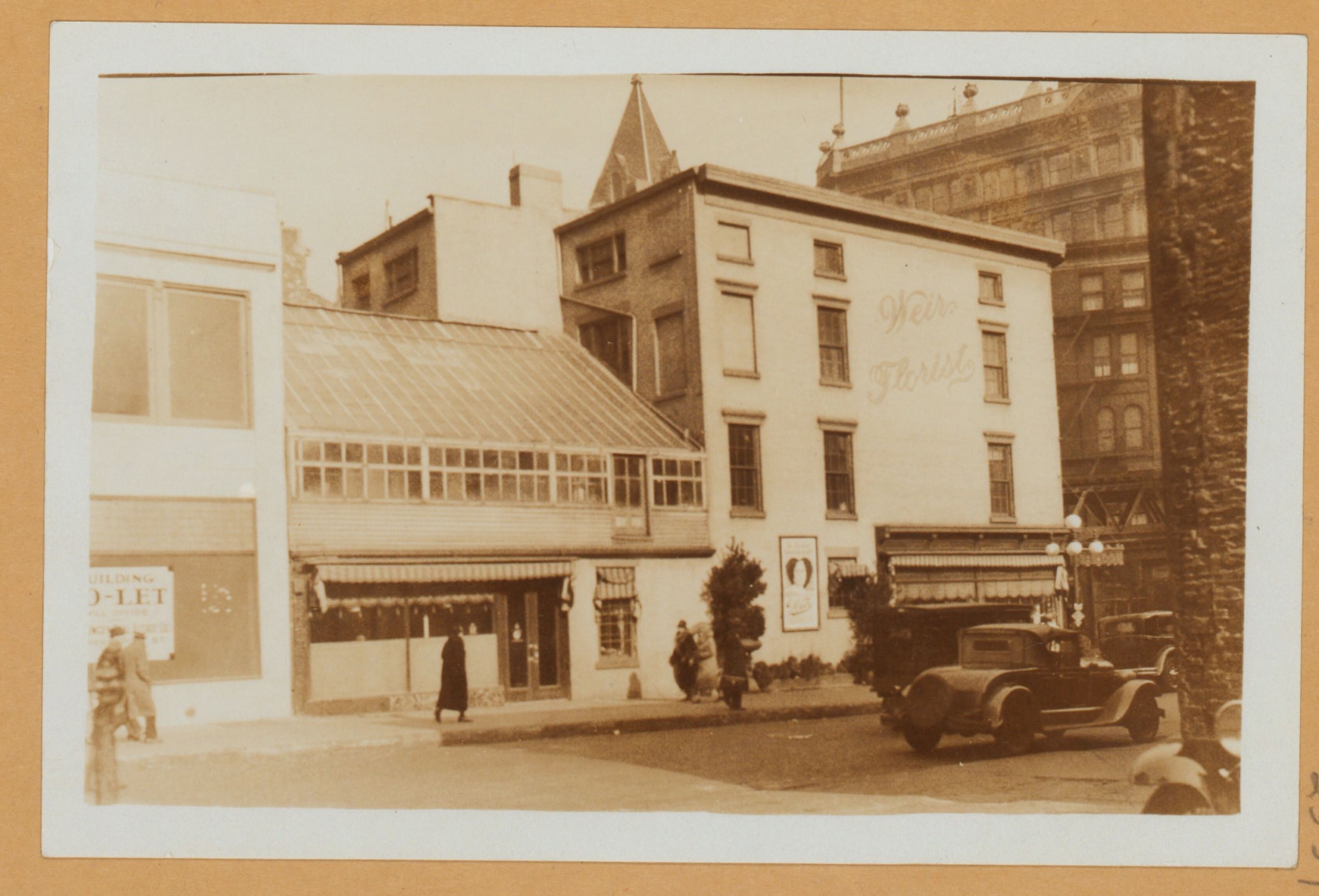
James Weir & Son florist shop, corner of Fulton and Pierrepont streets. (Left/top-1915; right/bottom-1931.) Today, site of One Pierrepont Plaza.
(John’s brother ran another branch of the family’s business which included its own iconic greenhouse – still standing and recently renovated in 2026 – located across from the main entrance to Green-Wood Cemetery.)
Within a year of buying 1 Monroe Place, the Weir family made more renovations. Notably, they expanded the bay window on the Clark Street side to today’s signature double height. According to the 1900 census, the Weir household consisted of Agnes & John; their son James together with his wife and baby; their daughter Agnes; and two servants plus one of the servant’s children.
After about 10 years in the house, the Weirs downsized, a popular trend as New York City apartment living became fashionable. Agnes and John moved nearby to “The Plymouth” apartments on Orange Street along with their daughter Agnes, her husband and young son. According to the census from 1905 the Weirs brought no servants with them.
Like many single-family homes in Brooklyn Heights in the first decades of the 20th century, whose owners decamped for apartments or the suburbs, 1 Monroe Place then became a boardinghouse. The Weirs’ situation was somewhat unusual however, because they chose not to sell the house. By leasing out the building instead, they probably saved it from demolition. Many former mansions on large or corner lots in Brooklyn Heights were being sold at this time as development sites for hotels.
At the start of 1 Monroe Place’s boardinghouse era, Mary Thayer was the first proprietor. Besides Mary, the house was filled with 14 lodgers and two servants, according to the 1905 census.
By 1910, the boardinghouse was being run by former hotel manager John Hagenloch. In that year, the census recorded 23 boarders in residence – teachers, salesmen for box and typewriter companies, clerks, stockbrokers and lawyers.
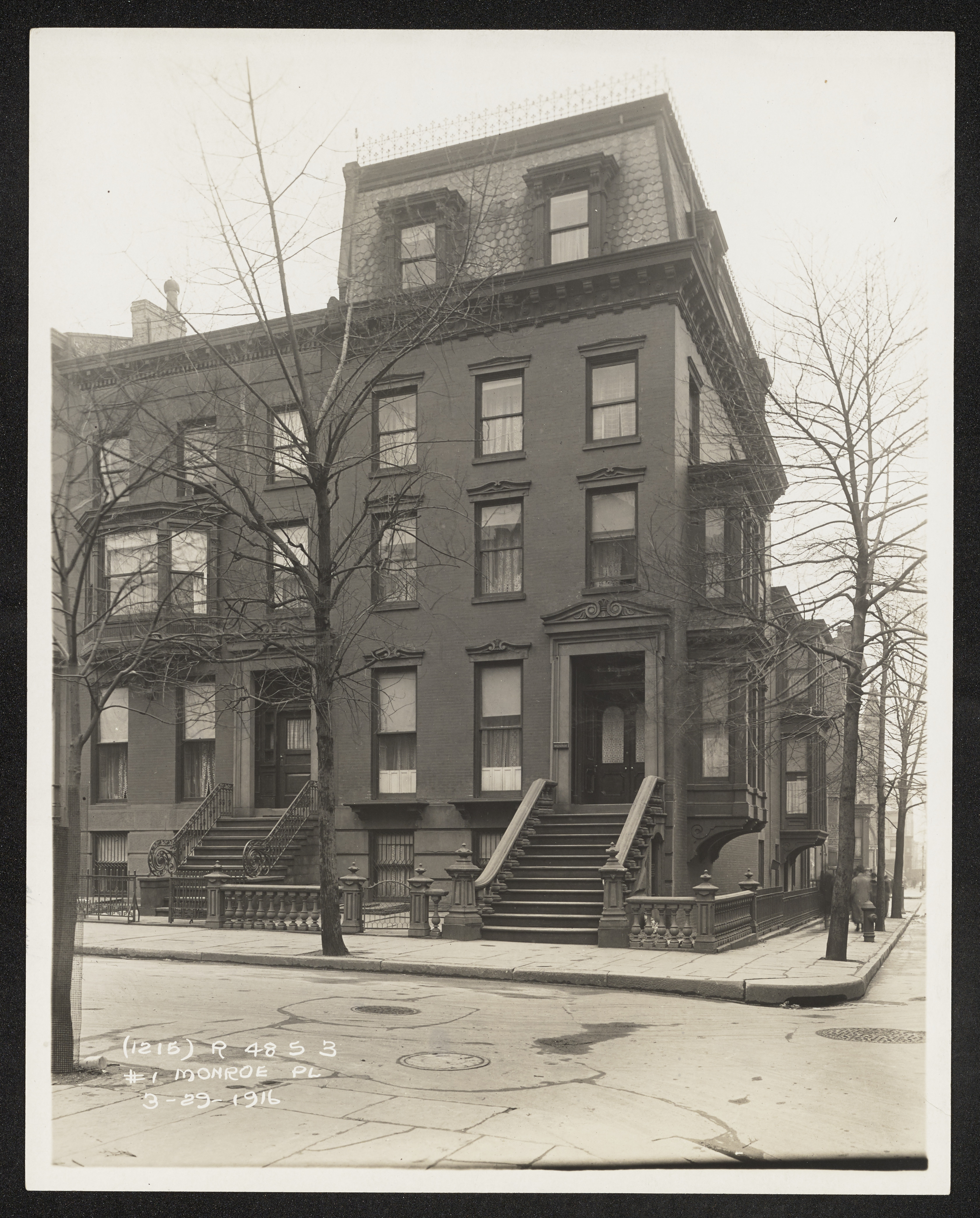
The Hagenloch family ran the boardinghouse for a decade. A photo from that period shows the house still looking elegant, much as it would have during its grandest days when the Jessop and Weir families lived there.
In 1920, John Weir died, and Agnes sold the house to a local building contractor named Joseph Parascandola for $19,000. Though he might’ve been expected to remove the house’s stoop in an apartment conversion process, as was typical in the Heights of that period, this doesn’t appear to have happened. Parascandola rented out flats in the house, but a photo of the building from 1922, when he sold it, showed the stoop still in place.
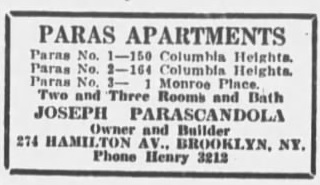
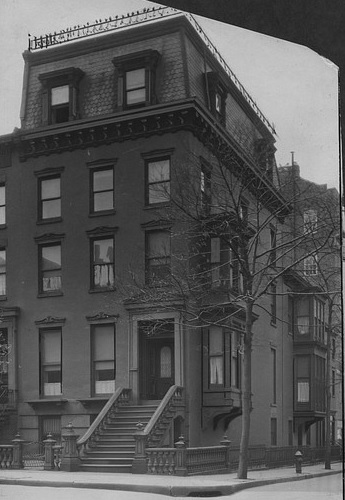
The house then changed hands frequently over the next decade. It was during this time that the stoop was removed. The main entrance to the house was moved to ground level at the side, and the house began to be known as 100 Clark Street. The house’s building records cannot be located, but an index to those records indicate a series of alterations in the mid-1920s to mid-1930s, and a 1940 photograph shows the building without its stoop.
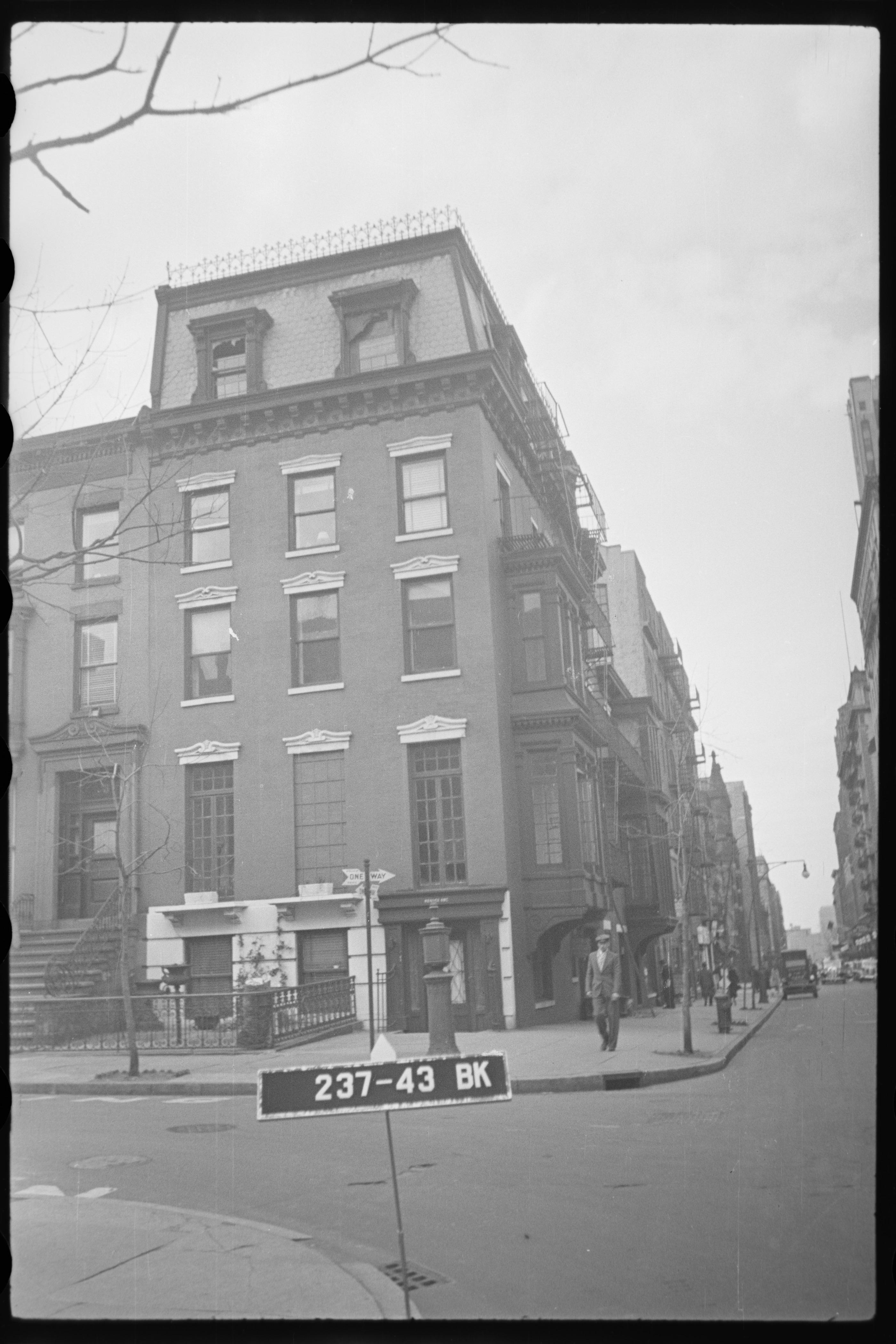
In 1934, dentist Maxwell Lanes bought the house. Lanes lived upstairs with several tenants and ran his practice downstairs. His father David was a local real estate agent, and Maxwell and his brother Nathan owned property across Brownstone Brooklyn. Maxwell soon bought the house next door at 3 Monroe Place as well. Over the next 40 years, Lanes would live either at 1 Monroe Place or 3 Monroe Place, together with various tenants in the apartments in both houses.
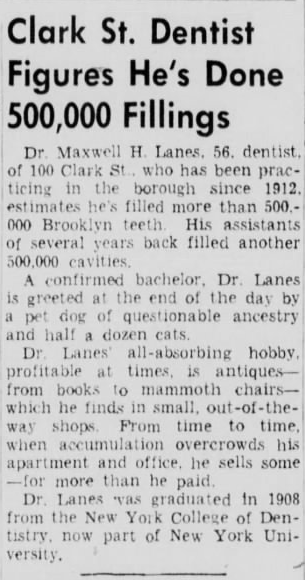
Early on in his time at 1 Monroe Place, Lanes tried to convince the city to rezone the ground floor for commercial use, to allow a storefront and not just medical offices. But the residents and churches of Monroe Place (backed by the Brooklyn Heights Association) successfully objected to his plan.
Maxwell Lanes was a frequent writer of letters-to-the-editor on topics of the day – he appears to have been a bit of a crank. His complaints ranged from the price of gold fillings during World War I, to the scourge of gangster movies during World War II, to undisciplined civil defense units during the Cold War. In the 1960s, he even accused one of his Monroe Place neighbors of harboring communist sympathies, which led to a libel lawsuit against Lanes and the paper. (Disposition of the suit – unknown. Ironically, the first ads Lanes took out for his dental practice appear in a New York City Socialist Party newspaper from 1910!)
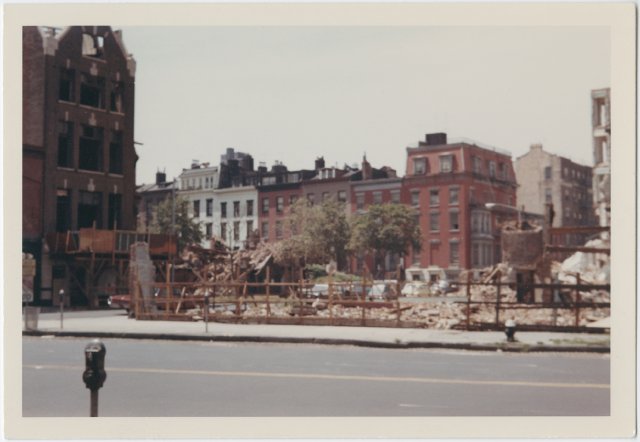
In the 1960s, the house at 1 Monroe Place, still owned by Lanes, narrowly survived demolition. The Cadman Plaza redevelopment claimed all of the houses across Clark Street and the corner church on the other side of Monroe Place.
Lanes died in the 1970s and then the house was owned by a series of investors. After many decades in poor repair, the house hit bottom in 2008. Conditions had deteriorated so badly that an emergency call to the Department of Buildings on Memorial Day weekend led to an immediate demolition order. The wreckers managed to take off the Mansard roof and the third story, before the Brooklyn Heights Association convinced the Landmarks Preservation Commission to intervene and save the rest of the building.
The current owner bought the building in 2010 and undertook an arduous transformation. Using archival photographs, the house’s exterior has been restored to its most glorious era following the Jessop and Weir renovations of the 19th century. And the interior has been reimagined for the 21st century, on display in the rooms of the 2026 Brooklyn Heights Designer Showhouse.